 By
The flight was late, the queue at the rental desk is long, and the car waiting in the bay is not the one in the booking photo. The boot takes one large suitcase and refuses the second. The gear stick has a sixth gear you were not expecting, the fuel cap says diesel, and the agent is asking whether you want to reduce your excess before you sign. Every one of those moments is a decision you could have made calmly at home.
Choosing a rental car comes down to five questions: will everything fit, can you drive the gearbox, how will you fuel it, what happens if it is damaged, and does it suit the roads you will use. The tips below take each in turn, then cover the booking details and pickup routine that protect you afterwards.
Tip 1: Size the car to the luggage, not the headcount
Rental categories are sold by seats, but seats are rarely the problem. A small hatchback seats four adults, yet with four on board its boot may take little more than a couple of soft bags.
Count the bags, then the people
Before you pick a category, list everything that has to travel: hard cases, cabin bags, a pushchair, golf clubs or skis. Hard suitcases are the awkward ones, because they cannot be squashed into a corner. Booking pages usually show a suggested number of large and small bags per category, and that is the figure to compare.
- Two people, light luggage: a small or compact hatchback is usually enough, and it will be easier to park.
- Two people with large cases, or a family of three: look at a compact estate or a larger saloon, both of which have long, flat boots.
- Family of four with full luggage: an estate, a mid-size SUV or a people carrier. Check that the boot is still usable with all seats up.
- Five or more, or bulky sports kit: a seven-seat people carrier or a minibus category, bearing in mind that a seven-seater with all seven seats in use has very little boot space left.
Comfort on long days
On long motorway stretches, rear legroom matters as much as boot space. Cruise control and air conditioning are common on modern rental cars, but if one is essential, check the category description rather than assuming.
When in doubt, move up one size when booking, rather than paying for an upgrade at the desk when you have no other choice. Thinking about where the bags will sit also matters for security, since luggage visible through the windows is an invitation at service stations and viewpoints. How to Make Sure That Your Vehicle Is Safe While You Are on Travel covers keeping the car and its contents safe on the road.
Tip 2: Manual or automatic, decide before you book
For UK drivers this is one of the most important choices, and it is easy to get wrong. In much of continental Europe and in many other destinations, manual cars are the norm in rental fleets. Automatics exist, but they are usually fewer, often sit in a higher category and can sell out in busy periods.
Why it matters more abroad
If your licence was obtained in an automatic, a UK licence restricts you to automatic cars, and the desk will check. Even if you can legally drive a manual, think honestly about the conditions. In a left-hand-drive car the gear stick sits on your right, so you change gear with your right hand while also adjusting to driving on the other side of the road, reading foreign signs and following navigation. Steep old towns add hill starts on cobbles, often with a queue of traffic behind you.
An automatic removes one layer of concentration from all of that, which suits a first trip on the right or routes with heavy traffic and steep gradients. If you drive a manual daily and the route is mostly open roads, a manual is sensible and gives you a wider choice.
How to make sure you actually get one
Book a category explicitly listed as automatic and check the confirmation says so. Do not book a manual hoping for an automatic on arrival, and if the desk offers a manual against an automatic booking, ask for the confirmation to be honoured.
Tip 3: Fuel type and the fuel policy
The fuel question has two parts: what goes in the tank, and how the rental company charges for it.
Petrol, diesel, hybrid or electric
Diesel cars suit long distances and heavy loads, because they are economical at steady motorway speeds. Petrol cars are better for short trips and city driving. Some city centres restrict vehicles under low emission rules, so check whether a zone on your route needs registration; fines generally fall to the driver.
Misfuelling is a common and expensive mistake, and damage caused by the wrong fuel is usually excluded from cover. Check the label inside the filler flap before you leave the car park. Pump labels differ abroad: diesel is gazole in France and gasóleo in Spain and Portugal, for example, so learn the local word before the first fill.
A self-charging hybrid needs no plug and is simply filled with petrol. A plug-in hybrid can run on petrol alone if charging proves awkward.
Electric cars: the charging realities
A fully electric rental is pleasant to drive, but only if charging works for your trip. Before booking one, think through the following:
- Where you will charge overnight. A hotel or rental property with a charger changes everything. Relying only on public chargers is workable but slower.
- How you will pay. Some public chargers accept a contactless card, while others need a network account or a charging card. Ask the rental company whether a charging card comes with the car.
- Range in real conditions. Range drops at sustained motorway speed, in cold weather, on mountain climbs and with a full load. Plan around a cautious figure, not the advertised one.
- Cables and connectors. Check which cables are in the boot before you drive off, and that the car's connector matches the chargers on your route.
- The return rule. Electric rentals usually have to come back with a minimum charge level, and a fee applies below it. Find out the level at pickup.
Full-to-full or pre-purchase
Under a full-to-full policy you collect the car full and return it full, paying only for the fuel you use at pump prices. Fill up close to the return point and keep the receipt, since it shows the time and location if the level is ever disputed.
Under a pre-purchase or full-to-empty policy you pay for a whole tank at the start and can return the car with any amount left. There is usually no refund for unused fuel, and the price per litre is typically set by the rental company rather than the pump. It only works out if you will genuinely drive the tank close to empty, for example on a long one-way trip. On a short city break it almost always means paying for fuel you never use.
Check the mileage terms at the same time. Many rentals include unlimited mileage, but some, particularly cheaper deals and premium categories, cap the distance per day and charge for every extra kilometre.
Tip 4: Understand the excess, the deposit and what cover means
Insurance is where the price you booked and the price you pay drift furthest apart, and the terms sound alike.
The key terms
- Third-party liability: covers damage or injury you cause to other people and their property. It is normally included in the basic rental price, as the law requires in most countries.
- Collision Damage Waiver (CDW): not insurance in the strict sense. It limits what you pay if the rental car itself is damaged, down to a fixed amount called the excess.
- Theft protection: limits what you pay if the car is stolen, again down to an excess. It is often bundled with CDW.
- The excess: the maximum you pay towards damage or theft before the waiver takes over. On many rentals this is a large sum, and it is the figure that matters most.
What the waiver usually leaves out
Standard CDW often excludes tyres, wheels, windscreens and glass, the roof, the underside of the car, lost or damaged keys, interior damage and misfuelling. Damage caused while breaking the rental terms, such as driving on a forbidden road surface, is generally excluded entirely. Read the exclusions list in the terms, not the summary on the booking page.
Reducing the excess: two routes
The first is the rental company's own excess reduction. If something happens you usually pay little or nothing, and the deposit is often smaller, but it is typically the more expensive option.
The second route is a standalone excess insurance policy bought separately before you travel, either for a single trip or for a year. It is usually cheaper, but it works differently. The rental company still takes the full deposit and charges you for any damage, and you then claim the money back from your insurer. When desk staff say you are not covered, they mean not covered by them.
The deposit hold on your card
Most rental companies place a hold on a credit card at pickup, often covering the excess plus a fuel amount. The money does not leave your account, but it blocks part of your credit limit for the whole rental and for a period after you return the car while the hold is released.
- The card usually has to be a credit card in the main driver's name. Debit cards are refused by many desks or accepted only with the full excess reduction bought on top.
- Make sure the credit limit can absorb the hold and still leave room for hotels and meals.
Desk extras, deposits and fuel charges are some of the commonest surprises on a trip. Unexpected Holiday Expenses covers how to anticipate them alongside the other costs that tend to catch travellers out.
Tip 5: Match the car to the route you will actually drive
A car that is ideal on a motorway can be a liability in a medieval town centre, and the reverse is true on a long mountain pass. Look at the roads on your itinerary, not just the destination.
Narrow old towns and tight parking
Historic centres across southern Europe and elsewhere were laid out long before cars. Lanes can be barely wider than a small car, with sharp corners, stone walls and pillars at bumper height. Many old towns restrict traffic in their centres with cameras, and a fine can arrive weeks later with an administration charge from the rental company. A smaller car also copes better with the tight ramps of underground car parks. If unsure, park outside the centre and walk in.
Mountain roads
Hairpin bends and long climbs reward a car with enough power for the load. The smallest engines can feel sluggish on steep gradients with four adults and luggage on board. On the way down, use a lower gear to let the engine slow the car rather than riding the brakes, which can overheat on long descents. If the route crosses high passes in winter, ask whether the car comes with winter tyres or snow chains, because some regions require them in certain conditions and the rules vary by country.
Gravel, dirt and unsealed roads
This is where rental terms catch people out. Many rental agreements forbid driving on unsealed roads, beaches, tracks and through water, and damage from those surfaces is excluded from cover, even if you bought every waiver. A four-wheel-drive category does not automatically lift the ban; read the terms for that specific category. If your itinerary includes a remote viewpoint at the end of a dirt track, either confirm in writing that it is allowed or plan to walk the last stretch.
Ferries and islands
Taking a rental car on a ferry often needs the rental company's permission, and damage at sea may not be covered. If an island hop is part of the plan, ask before booking whether it is allowed or whether it is easier to rent a second car on arrival.
Driving in the UK brings its own route questions, from single-track roads with passing places to tight city parking. Holiday Car Rental Tips When Visiting The UK covers local roads and habits for visitors, and if you are weighing up a longer touring trip, Caravan or Motorhome? Which is Best for a UK Road Trip? compares two quite different ways of doing it.
Booking details that change what you actually get
"Or similar" means a category, not a model
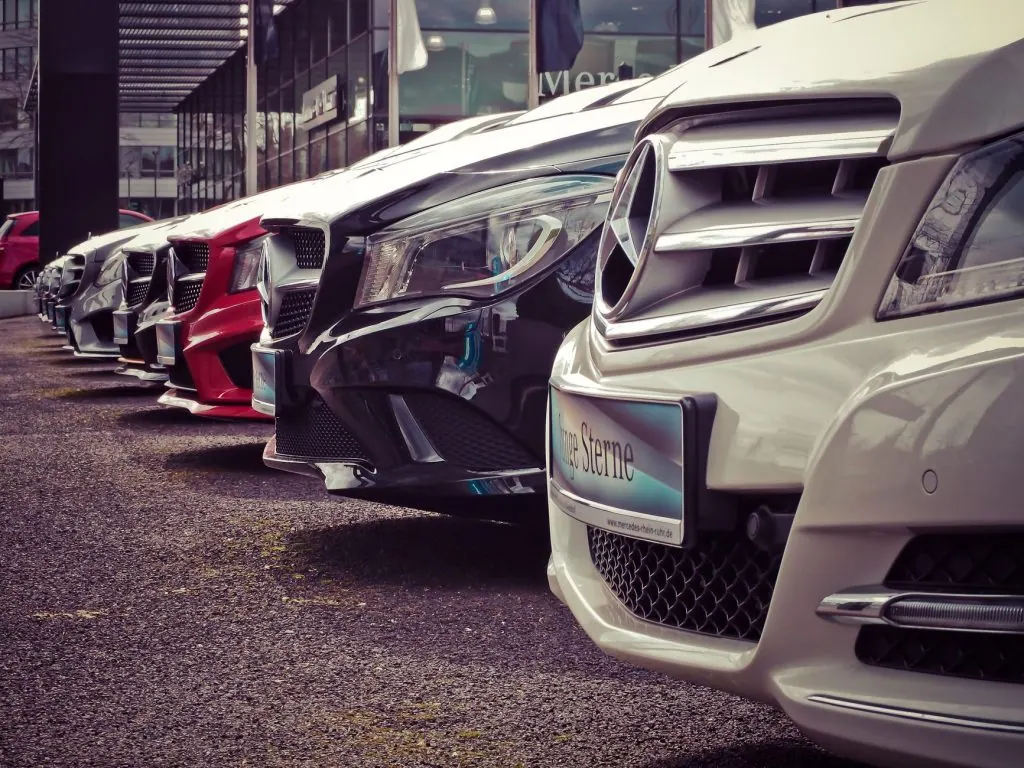
The car shown on the booking page is an example. You are booking a category, defined by size, number of doors, transmission and sometimes fuel type, and the company may give you any car from it. If the specific model matters, for example because you checked its boot dimensions, compare the luggage figures for the category instead and allow a margin. Some companies offer a guaranteed model at extra cost; otherwise, treat the photo as a rough guide only.
One-way rentals
Returning the car in a different city usually adds a one-way fee, larger across borders, and some international one-way routes are not offered at all. Compare that total against a round trip plus a train back to the start.
Crossing borders
Driving into another country normally requires the rental company's permission, which may come with a cross-border fee and extra paperwork. Some companies restrict which countries their cars may enter, and premium categories are often limited further. Declare every country on your route when booking. Driving across without permission can void the cover completely. Neighbouring countries may also have their own toll systems or road-use stickers, so check what is needed for each one.
Child seats
Rental companies can supply child seats on request, but availability is not always guaranteed, models vary and staff are often not permitted to fit them for you. Book seats in advance, check the age and weight range suits your child, and inspect the seat for damage before fitting it. Many families bring their own seat instead; check your airline's policy on carrying it, and look for ISOFIX points if your seat uses them.
Drivers and licences
Anyone who will drive must be named on the contract and present at pickup with their licence. Additional drivers, young drivers and sometimes older drivers usually carry a surcharge, and many companies require a licence to have been held for a minimum period. Some countries require an International Driving Permit alongside a UK licence, so check the rules for each country on the route on official government sources. UK licence holders may also be asked for a licence check code from the DVLA, which is generated online and only valid for a short period, so create it shortly before travelling.
At the desk and in the car park: pickup and return
The few minutes you spend before driving away are the best protection you have against charges after you get home.
At the desk
Compare the contract with your booking confirmation before signing: category, transmission, fuel policy, mileage, excess, deposit and extras. If offered an upgrade, ask whether it changes the fuel type, excess or deposit.
The walk-round
Inspect the car in good light and take your time.
- Film a slow walk-round video, then take close-up photos of every scratch, dent and scuff, including bumper corners and door edges.
- Check the wheels and alloys for kerb damage, the tyres for wear and the windscreen for chips.
- Look at the roof and the lower edges of the bumpers, which are easy to miss.
- Photograph the interior, including seats and the boot lining.
- Photograph the dashboard showing the fuel gauge or charge level and the odometer.
- Check that the spare wheel or repair kit is there, along with any safety equipment that local law requires, such as a warning triangle or reflective vests.
Make sure every mark is recorded on the damage form before you leave, going back to the desk if the car park is unstaffed. Your photos carry a timestamp, which matters in any dispute.
Return
Late returns can be charged as an extra day, so leave time. If staff are present, ask them to inspect the car with you and sign it off as undamaged. If you drop the keys out of hours, photograph the car in its bay from all sides, along with the fuel gauge and odometer, before leaving. Remove everything from the glovebox and boot, including charging cables if they are your own.
Keep the contract, the receipts and the photos until the deposit hold has been released and your card statement shows no unexpected charges. If a damage or fuel charge does appear, those files are what you will dispute it with.
Before you book, write down five things: the luggage you are taking, the gearbox you can comfortably drive, how you will fuel or charge the car, the excess you are willing to carry, and the worst road on your route. Then choose the category that fits all five.
Official sources and further reading
Opening times, entry rules and prices change, so check them on the official sites before you travel:
- GOV.UK: driving abroad: Licence, insurance and documents needed to drive abroad.