 By
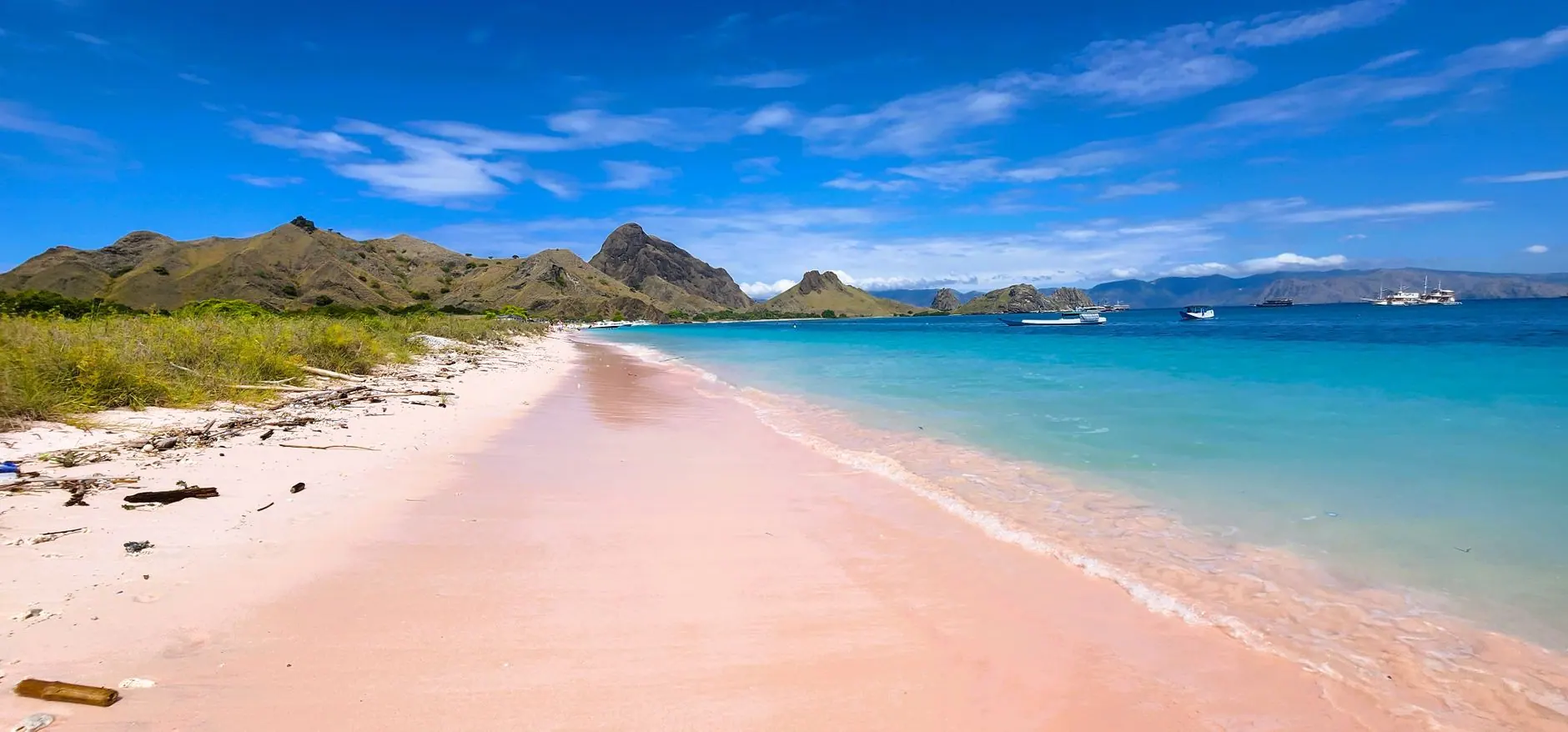
The speedboat cuts its engine a little way off a curved bay, and the crew point at the shore. From the deck, the sand looks faintly flushed, as if someone had dusted white powder with red. Step off into the shallows and pick up a handful, and the colour almost disappears in your palm. Look closely, though, and you will see tiny red fragments mixed through the pale grains. That is the whole secret of Komodo's pink beaches, and it explains why some visitors are thrilled and others feel let down.
This guide covers the pink and white sand beaches of Komodo National Park in East Nusa Tenggara, the Padar viewpoint hike, ranger-led walks to see Komodo dragons, snorkelling and diving, and how to plan the trip from Labuan Bajo on Flores.
Why the sand is pink, and why it looks different in photos
The pink colour comes from foraminifera, single-celled marine organisms that build tiny shells. One group of them has bright red shells and lives attached to the underside of coral and rocks on the reef. When they die, their shells break apart and wash ashore, where they mix with the white sand made from broken coral and shells. The result is a blend of red and white, which reads as pink from a distance.
Understanding that mix helps you set your expectations:
- The colour is strongest where the waves wash in. Wet sand at the waterline usually looks pinker than the dry sand higher up the beach.
- Light changes everything. Soft morning or late-afternoon light shows the tint well. Harsh midday sun tends to bleach it out, and cloud makes it look duller.
- Distance helps. From a boat or a hillside the pink is easier to see than when you are standing on it.
- Photos online are often edited. Many widely shared images have boosted saturation. In person the effect is gentler, closer to rose or salmon than to bubblegum.
Because the colour depends on a healthy reef producing those red shells, damage offshore means less colour on the shore over time. So do not pocket sand, shells or coral, not even a small bottle as a souvenir. Removing natural material from the national park is not allowed.
Pink Beach on Komodo, Padar's pink shore and the white sand stops
Most boat trips include at least one pink beach, but the itineraries use the phrase loosely. It helps to know which beach is which.
Pink Beach (Pantai Merah) on Komodo
The beach usually sold simply as Pink Beach, known locally as Pantai Merah, lies on Komodo Island itself. It is a sheltered bay backed by bare, grassy hills, with a reef starting very close to the shore. That makes it one of the easiest places in the park to snorkel straight from the beach: you can wade in and see coral and reef fish within a few strokes.
Boats anchor offshore and ferry passengers in, or let them swim. Because this beach is on the dragons' island, rangers and crew may advise you not to wander off the sand into the scrub behind it. Treat that advice seriously.
The pink beach on Padar
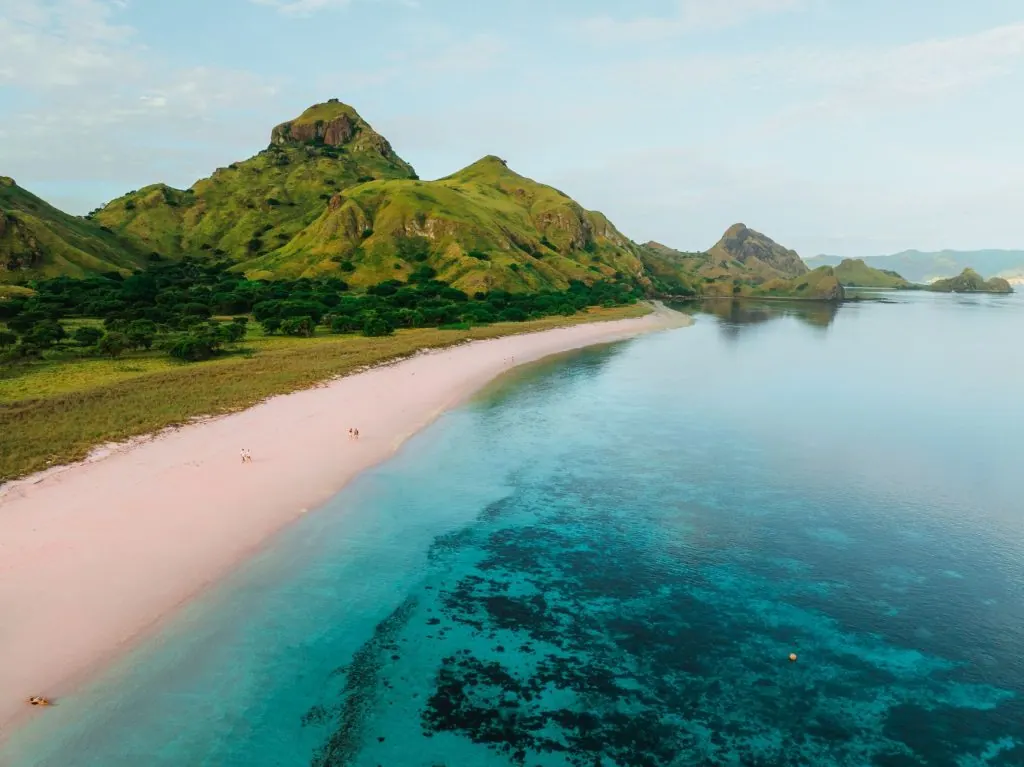
Padar Island also has a pink-tinged beach, and many tours stop at it after or before the viewpoint hike. It is a separate stop from the viewpoint itself, usually reached by boat around the coast. Simple stalls selling drinks and snacks have operated here, but do not rely on them; carry water and food from the boat.
Which beach looks pinker is a matter of light, tide and the day you visit, so do not choose your trip based on claims that one is far more colourful than the other. If pink sand is your main reason to go, an itinerary that visits both gives you two chances in different light.
Taka Makassar and Kanawa: the white sand stops
The other beaches you will hear about are white. Taka Makassar is a small sandbar in the middle of the park that appears at lower tides and shrinks as the water rises. There is no shade, so bring a hat.
Kanawa Island, closer to Labuan Bajo, has a proper beach and reef right off the jetty, which makes it a gentle snorkelling stop at the end of a day, or a place to stay if you want an island night.
If you are comparing Komodo with more conventional seaside holidays, the contrast with somewhere like 4 Luxury Beach Vacations in Florida is stark: Komodo's beaches are reached by boat, have few or no facilities, and are visited around a schedule set by tides and the sea.
Hiking to the Padar Island viewpoint
The view that appears on almost every Komodo poster is from the ridge on Padar Island, the rugged island between Komodo and Rinca. From the top you look down over several curving bays on either side of a narrow neck of land, with beaches in different shades of sand and turquoise water between steep brown and green hills.
What the climb is like
The route starts at the jetty and climbs steadily on a path that is partly built as steps. It is not technical, but it is steep, exposed and relentless, and there is almost no shade. The descent is where people slip on loose gravel, so take it slowly.
- Footwear: trainers or light walking shoes. Flip-flops are a common mistake and make the loose sections much harder.
- Water: carry your own, and drink before you start.
- Sun: hat, sunglasses and sunscreen, even early in the day.
Timing
Sunrise and late afternoon are the best times to climb. The light is softer, the heat is easier, and the bays show more contrast. Midday brings both the harshest light and the largest wave of speedboat day trips, which tend to arrive at similar times. Liveaboard boats often anchor near Padar overnight so that guests can be on the path at first light, which is one of the strongest arguments for staying on the water.
The ridge is managed by park staff, and access rules for Padar have changed in the past. Stay on the marked path, do not climb onto the fenced or eroded edges for photos, and check before you go whether there are current restrictions or a requirement to go with a ranger or guide. The savannah here is fragile and fire-prone, so never smoke or leave rubbish on the hill.
Padar is visited for the scenery, not for wildlife. Do not expect to see dragons here; the ranger-led walks on Komodo and Rinca are where those encounters happen.
Walking with Komodo dragons on Komodo and Rinca
The Komodo dragon is a giant monitor lizard found only on a few islands in this part of Indonesia, including Komodo and Rinca and parts of western Flores. Seeing one in the wild is the reason the park exists, and it is managed accordingly. You can only walk in dragon areas with a park ranger.
How a ranger walk works
On Komodo, walks start from the ranger station at Loh Liang. On Rinca, they start at Loh Buaya, where the visitor area has been rebuilt with raised walkways. Your boat crew will usually handle the arrangements, but you will be assigned a ranger at the station before you set off.
Walks come in different lengths. Shorter loops stay close to the station and suit families or anyone short of time. Longer routes go further into the dry forest and savannah, with more walking in the heat and a better feel for the landscape, though no guarantee of more sightings. Ask at the station which routes are open that day.
Rangers carry a long forked stick, which they use to keep dragons at a distance if one approaches. Sightings are common but never certain. Dragons are often seen resting in shade, near water, or close to the station areas.
Safety rules to take seriously
- Stay with your ranger at all times and walk in a group. Do not drop behind to take photos.
- Keep the distance the ranger sets. Dragons can move fast over short distances, and their bite is dangerous and can cause serious infection and bleeding.
- Tell the ranger if you have an open wound or are bleeding, since dragons respond strongly to the smell of blood.
- Never feed, touch or provoke a dragon, and never try to get a selfie close to one.
- Do not walk alone anywhere outside the beach or jetty area on these islands, even for a short distance.
Welfare and the bigger picture
The Komodo dragon is listed as endangered by the IUCN, and its long-term survival depends on healthy habitat and plenty of natural prey such as deer and wild pigs. Feeding dragons for visitors was once part of the experience and is no longer done. Animals that learn to associate people with food become more dangerous and less wild, which is why you should be wary of any offer to see a dragon "up close" outside the official ranger system.
Komodo or Rinca?
Both islands offer ranger walks, and you do not need to visit both. Komodo has the famous name, the village and Pink Beach nearby, which makes it easy to combine in one day. Rinca is closer to Labuan Bajo and its walkways make for an easier, more level visit, which can suit families with younger children or travellers with limited mobility. If you are weighing Komodo against other family-friendly trips in the region, 10 Asian Destinations to Go with Your Kids has more options.
Komodo Island is also home to Komodo village, a fishing community whose residents have lived alongside the dragons for generations. Residents sell carved wooden dragons and other handicrafts, and buying directly from them puts visitor money into the park's own communities.
Snorkelling and diving: Manta Point, currents and reef etiquette
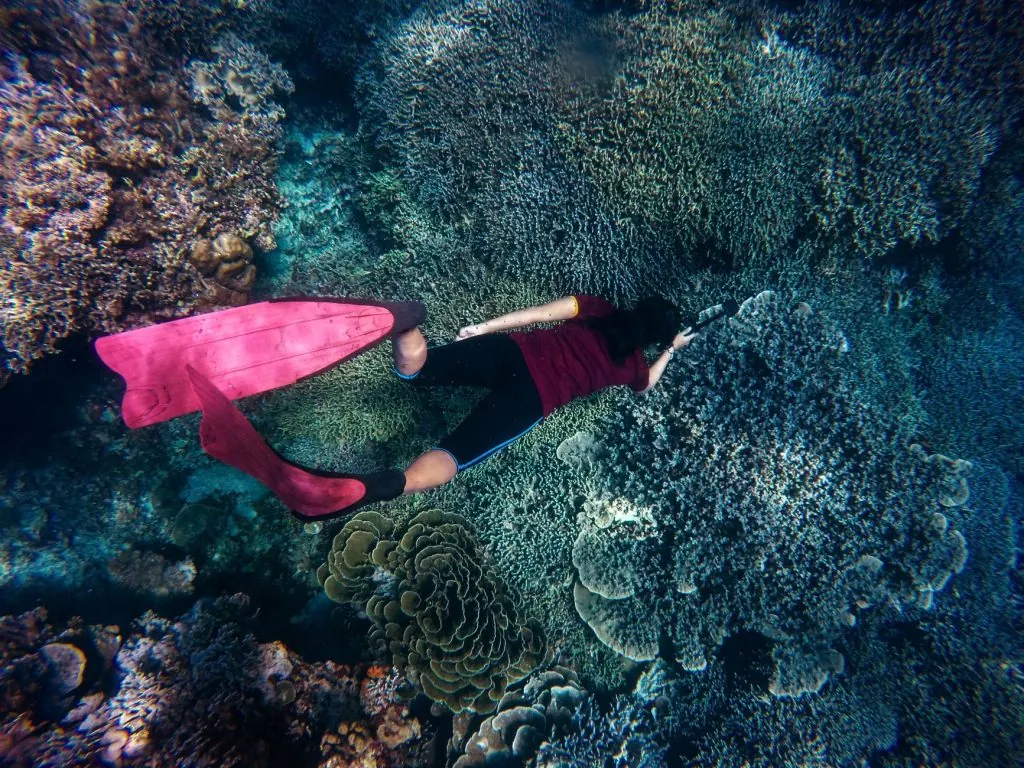
Above the water, Komodo is dry and brown. Below it, the park has dense coral, big schools of fish, turtles, reef sharks and manta rays.
The sites you will hear about
- Manta Point, also called Makassar Reef, near Taka Makassar: a drift over a sandy, rubble-strewn area where manta rays often come to feed and be cleaned. Sightings vary with the tide and season.
- Pink Beach: easy beach snorkelling over coral close to shore.
- Siaba Besar: a sheltered bay often visited for turtles.
- Kanawa Island: shallow reef off the jetty, good for beginners.
- Batu Bolong: a small rock with spectacular coral and fish life, but exposed to strong currents. It is best left to divers and confident snorkellers with an experienced guide.
Currents are the main risk
Komodo sits between two seas, and large volumes of water move through its channels with the tides. That is why the reefs are so rich, and it is also why currents can be strong, sudden and hard to read from a boat. At Manta Point snorkellers are usually dropped up-current and drift, with the boat following to pick them up.
- Listen to the briefing and ask how the pick-up works before you get in.
- Wear a life jacket or use a float if you are not a strong swimmer. There is no shame in it here.
- If a current pulls you, do not fight it head-on. Swim across it and signal the boat.
Divers should choose an operator that runs proper briefings, carries safety equipment such as surface marker buoys, and matches sites to experience levels. Several well-known dives are for advanced divers only.
Reef etiquette
- Do not stand on coral or touch it, even where it is shallow. If you need to rest, float on your back or hold the boat ladder.
- Keep your fins up and away from the reef, and avoid kicking up sand.
- Give mantas and turtles space. Do not chase, touch or swim on top of them.
- Use a mineral sunscreen or cover up with a rash vest to reduce what you leave in the water.
- Take nothing, including sand, shells and coral fragments.
At dusk, some boats anchor near Kalong Island, a mangrove island where large numbers of flying foxes leave their roost and fly across the sky.
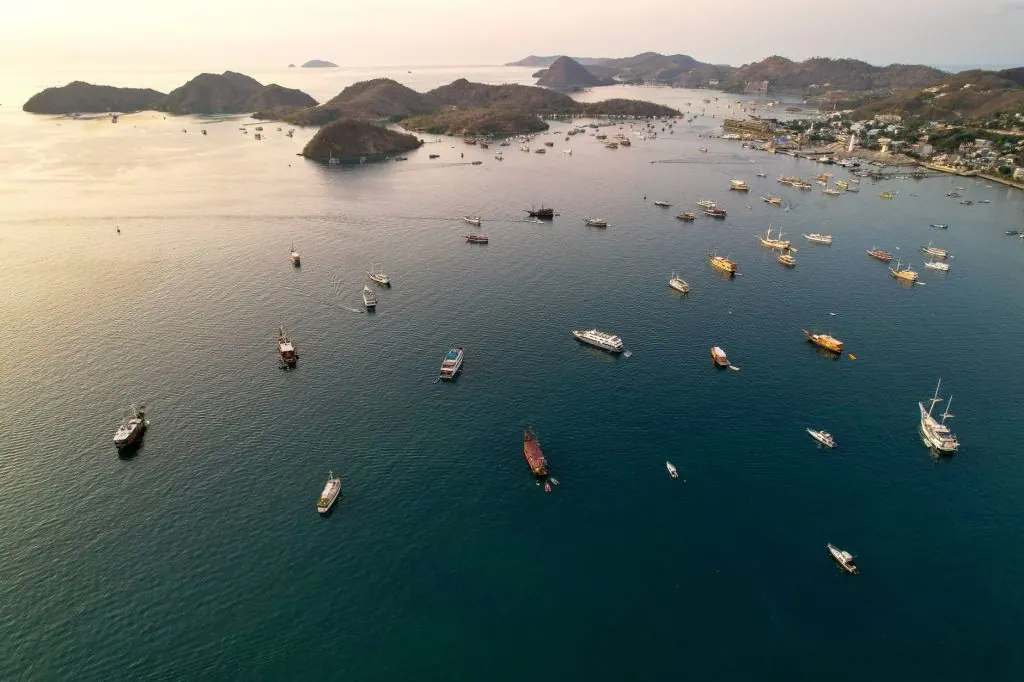
Labuan Bajo: the gateway on Flores
Every trip into the park starts in Labuan Bajo, a harbour town on the western tip of Flores. It has grown fast from a small fishing port into a busy base for boats and divers.
Getting there
Most visitors fly into Komodo Airport in Labuan Bajo on a domestic flight, usually from Bali or Jakarta. Some arrive by sea instead, on a public ferry from Sumbawa or on a multi-day boat trip from Lombok, which passes through the islands on the way.
Flight schedules and ferry services change and are affected by weather, so do not plan a tight connection between your return flight and the end of a boat trip. Leave at least a buffer night in Labuan Bajo on the way out.
What to do in town
- Sunset viewpoints: the hills behind the town, including Puncak Waringin, look down over the harbour and the islands.
- Batu Cermin: a limestone cave a short ride from town, where light enters through gaps in the rock.
- The evening seafood stalls along the waterfront, where you choose fish and have it grilled.
What to eat and drink
Look for ikan bakar (grilled fish with chilli sambal), nasi campur (rice with a selection of small dishes), and se'i, smoked meat associated with East Nusa Tenggara. Flores is also known for its coffee, grown in the highlands, which you will find in cafes around town and sold as beans to take home.
Staying near the harbour makes early boat departures easier; places on the hills have views but need transport. ATMs are available in town, but cash is often needed on the islands, so withdraw before you leave.
For other ways to fit Komodo into a longer route through the country, Exciting Things to do in Indonesia covers destinations from Bali to Java and beyond.
Day trip or liveaboard, seasons and park rules
The biggest decision you make is how you see the park. It shapes your budget, how early you get up and how crowded the sites feel.
Speedboat day trips
A shared or private speedboat from Labuan Bajo can cover the classic circuit in one long day: Padar, Pink Beach, a ranger walk on Komodo, Manta Point and Taka Makassar.
The trade-offs are real. Departures are early, the boats are fast and can be bumpy in open water, and you arrive at each site at roughly the same time as other day boats. You also see Padar and the pink beaches in the middle of the day, when the light is least kind to the colour.
Liveaboard boat trips
Multi-day trips on traditional wooden boats, often built in the phinisi style, sleep on board and move between sites at a slower pace. They can be on Padar for sunrise, snorkel quieter reefs and anchor off Kalong Island at dusk. The range is wide, from basic deck-sleeping boats to private cabins.
Look carefully at safety before booking. There have been accidents involving tourist boats in the park, including fires and sinkings. Ask whether the boat carries enough life jackets for everyone, a radio and fire extinguishers, and whether the crew give a safety briefing. Do not choose on price alone.
When to go
Komodo has a dry season and a wet season. The drier months bring the brown, golden hillsides seen in most photos, generally calmer conditions and the busiest period for boats. The wet season turns the hills green, which many photographers prefer, but brings rain, more unpredictable seas and the occasional cancelled crossing. Sea conditions and visibility also vary between the north and south of the park, with cooler, plankton-rich water in the south at times attracting mantas. A dive operator or boat crew can tell you which sites are working that week.
Fees and permits
Entry to Komodo National Park requires paying park fees, and there are separate charges for activities such as ranger walks, snorkelling and diving. These fees and the way they are collected have changed several times, and there have been proposals to limit visitor numbers or change access to Komodo Island itself. Check the current rules on the official Komodo National Park website before you travel, and confirm with your boat operator exactly which fees are included in the price you are quoted and which you must pay on the day.
If you are comparing Komodo with an easier beach holiday for younger children, places like those in Australia’s Most Family-Friendly Beaches offer lifeguards and facilities that Komodo's beaches simply do not have.
Book a trip that puts you on Padar at sunrise and on Pink Beach while the light is still low, keep a spare night in Labuan Bajo before your flight, and leave every grain of pink sand exactly where you found it.
Official sources and further reading
Opening times, entry rules and prices change, so check them on the official sites before you travel:
- UNESCO: Komodo National Park: World Heritage listing for the park.