 By
You collect the keys, sit down on what feels like the passenger side, and reach for the gear stick with the wrong hand. The car park exit leads straight onto a roundabout, traffic is coming from a direction you did not expect, and the sat-nav is already telling you to take the third exit. For many overseas visitors, the first ten minutes behind the wheel in Britain are the hardest part of the whole trip.
A hire car opens up the parts of the UK that trains and buses reach only slowly: the Scottish Highlands, the Welsh mountains, the Cornish coast, the Yorkshire Dales and the Lake District. But British roads have quirks that catch visitors out, and most of the expensive mistakes happen off the road, in charges, fines and paperwork. This guide covers what to book, what to check and how the roads actually work, so the car becomes the easy part of the holiday.
Decide where you actually need the car
The most useful rental decision is often how few days you book. Many visitors hire a car for the whole trip and then pay to park it while they explore cities on foot. In Britain's larger cities, a car is usually more burden than help.
Cities that work better without one
London is the clearest case. The Underground, buses, Overground and river boats reach almost everything a visitor wants to see, central parking is scarce and expensive, and driving into the centre brings daily charges that are covered later in this guide. If London is on your itinerary, see it first or last, without a car. Our guide to the Top 10 Places To Visit In London works entirely on public transport.
Edinburgh is similar. The Old Town and the Royal Mile are compact, steep and partly cobbled, the New Town has tight one-way systems and controlled parking, and the city centre is inside a low emission zone. Walk it, use the trams and buses, and pick the car up when you are ready to head for the Highlands or the Borders.
Pick up on the edge, not in the middle
A practical pattern is to take the train out of the city and collect the car where the countryside starts. Rather than driving out of central London, travel by rail to a town on the edge of the area you want to explore, such as Oxford for the Cotswolds, Exeter for Devon and Cornwall, Inverness for the Highlands or Windermere for the Lake District, and rent there. You skip the most stressful urban driving, avoid city charges and start the hire on quieter roads.
Airport branches are convenient, but large airports sit next to busy motorway junctions, a hard first drive on the left after a long flight. If you collect there, consider staying the first night nearby and driving when rested.
Booking: transmission, size and paperwork
Manual is the default, so book automatic early
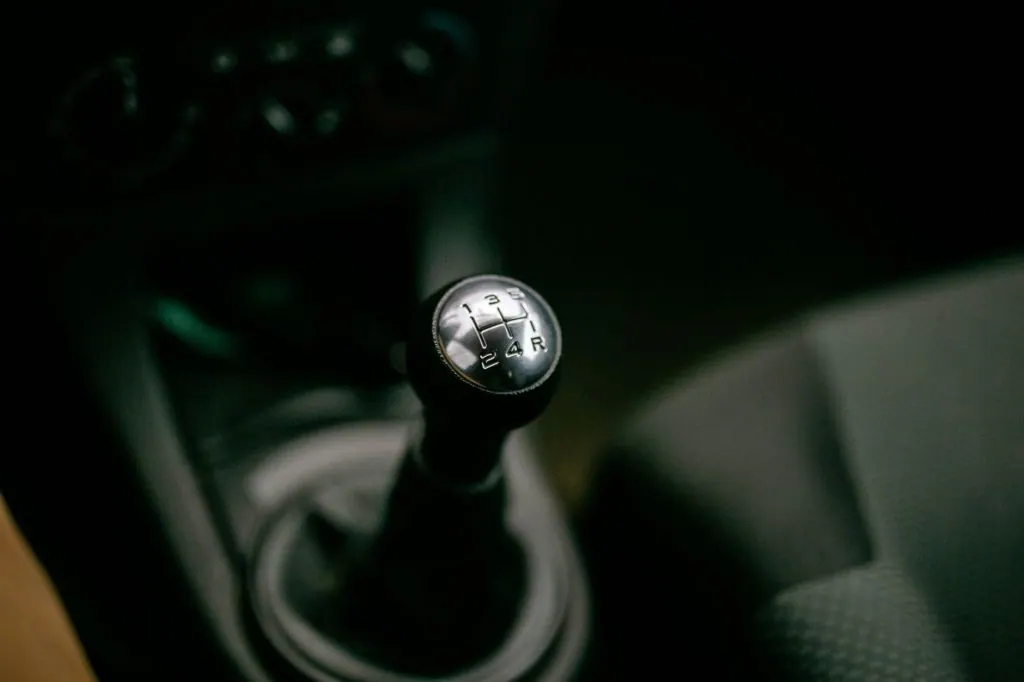
Most British drivers learn on a manual gearbox, and many rental fleets still reflect that. If you do not drive a manual every day at home, book an automatic and do it well ahead, because automatics in smaller categories run out first, especially in summer and at regional branches. Arriving with a manual booking and hoping to swap at the desk rarely works.
Even confident manual drivers should think twice. In a right-hand-drive car the gear lever sits to your left, so you change gear with your left hand while your brain is already busy keeping left, reading signs and judging gaps. The pedals are in the same order as anywhere else, clutch on the left and accelerator on the right, but the extra workload on hills, in queues and at junctions is real. An automatic frees up attention for the road.
Choose a smaller car than you think
British country lanes, village streets and older car parks are narrow, and parking bays in multi-storey car parks can be tight even for mid-sized cars. A compact car is easier on single-track roads and through stone-walled villages in the Cotswolds or Cornwall. Balance that against luggage, since bags left visible on the back seat invite theft. Our guide 5 Tips to Choosing the Right Car to Rent walks through matching size, fuel and boot space to your plans.
Licence and permit checks
Whether you can drive in the UK on your home licence, and for how long, depends on the country that issued it. Some visitors also need an International Driving Permit. Check the official UK government guidance on driving with a non-GB licence before you travel, and then check the rental company's own terms, which can be stricter than the law. Companies set their own rules on minimum age, how long you must have held a full licence and surcharges for younger drivers.
Bring the physical licence, not a photo of it. Most companies require a credit card in the main driver's name for the deposit, and debit card policies vary, so confirm before you book. Every driver must be named on the agreement, since an unnamed driver is usually not insured.
Insurance, the excess and the handover
The headline rental price normally includes basic cover, but with a large excess: the amount you pay towards any damage or theft before the insurance takes over. That excess is why the desk will offer extra cover, often called an excess waiver or super cover, which reduces it or removes it.
Your options on excess
- Buy the rental company's cover: the most expensive route, but if something happens you simply walk away, with no claim to make.
- Standalone excess insurance: bought separately before you travel. If there is damage, the rental company charges your card and you claim the money back from the insurer afterwards. You need a credit limit large enough to absorb that charge in the meantime.
- Credit card cover: some cards include rental protection, but many exclude certain countries, vehicle types or longer hires. Read the policy wording.
Whatever you choose, check what is excluded. Tyres, windscreens, the underside of the car, roof damage and lost keys are often outside basic cover. The deposit hold on your card is usually released after return, but it can take days to disappear from your balance, so do not plan your spending money around it.
Inspect before you drive away
Walk round the car before you sign. Photograph or film every panel, the wheels and alloys, the windscreen, the interior and the dashboard showing fuel level and mileage. Make sure every existing scratch and chip is marked on the paperwork before you sign. Check which fuel the car takes and where the roadside assistance number is kept. Our guide How to Make Sure That Your Vehicle Is Safe While You Are on Travel has a fuller checklist for keeping the car and your belongings secure along the way.
Before leaving, adjust the seat and mirrors and find the indicators and wipers, which may be on the opposite stalks from your car at home. Holding a phone while driving is illegal in the UK, so use a mount and set the route while parked.
Driving on the left: the first hour and roundabouts
Keep the centre line next to you
The simplest rule is that you, the driver, should always be next to the centre of the road. When you turn right, you cross the oncoming lane, just as a left turn does in right-hand traffic countries. When you turn left, you stay tight to the kerb. The moments of highest risk are pulling out of a car park, a petrol station or a quiet junction with no other traffic around, because there is nothing to follow and instinct takes over. Say "left, left, left" out loud if it helps.
How British roundabouts work
Traffic on a roundabout moves clockwise, and you give way to traffic coming from your right, which means traffic already on the roundabout. Once you are on, you have priority over vehicles waiting to join.
- Turning left, usually the first exit: approach in the left lane, signal left, and keep left.
- Going straight ahead: usually the left lane unless road markings say otherwise. Do not signal on approach, and signal left after passing the exit before yours.
- Turning right, or taking a later exit: approach in the right lane, signal right, keep right on the roundabout, then signal left after the exit before the one you want.
Lane markings on large multi-lane roundabouts override these general rules, so read the arrows painted on the approach and the signs before it. Mini-roundabouts, a white painted circle on the road, follow the same give-way rule but have no room for error: go around the painted circle, not across it.
Speed limits, cameras and motorway signs
The national speed limit sign
Many visitors look for a number and find instead a white circle with a black diagonal stripe. This is the national speed limit sign, and it means the default limit for that type of road and vehicle applies. The limit is different on single carriageways, dual carriageways and motorways, and lower for vehicles towing caravans or trailers. Learn the current figures from the official Highway Code before you travel, because there is often no numbered sign to remind you.
Cameras and fines
Speed cameras include fixed cameras, often painted yellow, mobile vans, and average speed cameras that time you between two points over a long stretch, frequently through motorway roadworks. Slowing down only at the camera does not help with average speed checks.
When a hire car is caught speeding, in a bus lane or on a yellow box junction, the notice goes to the rental company. The company passes your details to the authority and usually charges you an administration fee for doing so, often weeks after you have flown home. Fines follow you.
Motorway and dual carriageway habits
- Overtake on the right and move back to the left lane when you have finished. Sitting in the middle lane on an empty motorway is an offence.
- Variable limits shown in a red circle on overhead gantries are mandatory, not advice.
- A red X over a lane means it is closed. Move out of it.
Drink-driving limits are lower in Scotland than in England and Wales. The safe approach is simply not to drink at all if you are driving.
Narrow lanes and single-track roads
Some of the most beautiful driving in Britain is on roads only one car wide. They are common in the Scottish Highlands and islands, rural Wales, Cornwall and Devon, the Yorkshire Dales and the Lake District, and they need a different technique.
Using passing places
On single-track roads with passing places, small widened bays often marked with a sign, the rule is to pull into a passing place on your left when you see an oncoming vehicle, or wait opposite one on your right so the other driver can pull past. Do not swerve into a passing place on the right side of the road. Passing places are also used to let faster traffic behind you overtake, so pull in if a queue builds up. They are not for parking or photo stops, however good the view.
A wave of thanks when someone pulls in for you is part of the etiquette.
Hedged lanes in the south-west
In Cornwall and Devon, many lanes have high hedges or stone banks on both sides and no formal passing places. Meeting a tractor or a delivery van means one of you reversing to a gateway or a wider spot. Drive slowly enough to stop within the distance you can see, look well ahead for wider points, and practise reversing in a straight line before you need to. Sat-navs often pick these lanes as shortcuts, so stick to A roads where you can.
Mountain passes and weather
Steep passes such as Hardknott and Wrynose in the Lake District, or the Bealach na Bà on the way to Applecross in the Highlands, have very tight bends and steep gradients. They can be hard work in a small hire car, especially a manual, and some rental agreements discourage them. In the Highlands, watch for sheep and deer on unfenced roads, and fill up when you can, because fuel stations are far apart. Popular routes such as the North Coast 500 get busy in summer, and many of their roads are single-track.
London charges, clean air zones and the Dartford Crossing
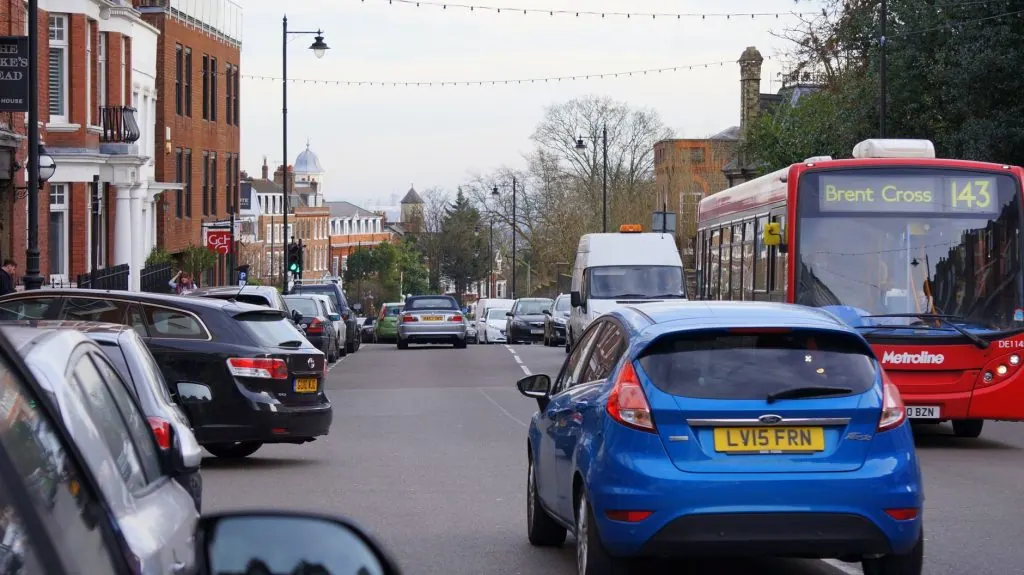
The most common surprise bill for visitors is not a parking ticket but a charge they did not know existed. Most of these schemes have no barriers or booths: cameras read the number plate and you are expected to pay online.
London: Congestion Charge and ULEZ
The Congestion Charge applies to most vehicles driving in central London during charging times. It is marked by a white C in a red circle on road signs and painted on the road at the edge of the zone. The Ultra Low Emission Zone, or ULEZ, covers a much larger area of Greater London and applies to vehicles that do not meet its emission standards. Most modern hire cars meet those standards, but do not assume: ask the rental company and check the vehicle on the official checker.
Charging hours, exemptions, amounts and payment deadlines change, so check the official Transport for London website before you drive and pay there directly. Rental companies typically do not pay these charges for you, and an unpaid charge turns into a penalty that comes back to you with the rental company's fee on top. Unofficial sites that offer to pay for you add their own fees.
Clean air zones elsewhere
Several other cities run clean air or low emission zones, including Birmingham, Bristol and Bath in England, and Glasgow, Edinburgh, Aberdeen and Dundee in Scotland. Rules differ: some charge non-compliant vehicles, while the Scottish zones work as a ban with penalties. Use the official UK government vehicle checker for England, and the official Scottish low emission zone information for Scotland, before driving into a city centre.
The Dartford Crossing and other remote tolls
The Dartford Crossing carries the M25 over the Thames east of London, and many visitors cross it without realising, especially when driving between the Channel ports in Kent and the north. There are no toll booths. You must pay online or by phone within the deadline shown on the official government page. Set a reminder as soon as you have crossed. The Mersey Gateway bridge near Liverpool works in a similar way. Ask the rental company how they handle these, because some register their cars for automatic payment and others leave it entirely to you.
Fuel, parking and returning the car
Petrol or diesel: check the nozzle
Putting the wrong fuel in a hire car is one of the most expensive mistakes a visitor can make, and it happens easily because pump colours are not the same in every country. In the UK, petrol nozzles are often green and diesel nozzles often black, but this is not guaranteed. Read the word on the pump and the nozzle, and check the label inside the fuel flap before you start. If you do misfuel, do not start the engine, and call the roadside assistance number on the rental agreement.
Reading the lines on the road
- Double yellow lines mean no waiting at any time, unless a nearby sign says otherwise.
- A single yellow line means restrictions apply at the times shown on a nearby plate.
- Short yellow marks on the kerb mean loading restrictions.
- Red lines, found on some major roads in London and a few other cities, mean no stopping.
In car parks, pay-and-display means buying a ticket at the machine and leaving it face up on the dashboard. Many car parks have moved to paying by phone app or card instead, and different towns use different apps, so it is worth downloading the one shown on the signs while you have good signal. In national parks and at popular beaches, car parks fill early in summer, so arrive before mid-morning or plan to walk in from a village.
Returning the car
Most rentals are full-to-full: you collect the car with a full tank and return it full. Refuel at a station close to the drop-off point and keep the receipt. Return on time, because late returns can be charged as an extra day. Repeat your photos and video in the return bay, including the fuel gauge and mileage, especially if you drop off out of hours when nobody inspects the car with you.
If you would rather combine car and bed, our comparison Caravan or Motorhome? Which is Best for a UK Road Trip? covers the trade-offs, and 5 Alternative Holidays To Do In The UK has ideas for trips where a car really earns its keep.
Book an automatic, collect it outside the big cities, check the official pages for any city or crossing charges on your route, and photograph the car at both ends of the hire. Do those four things and the roads themselves become the enjoyable part.
Official sources and further reading
Opening times, entry rules and prices change, so check them on the official sites before you travel:
- VisitBritain: The national tourism agency's guide to places and things to do across Britain.
- GOV.UK: driving abroad: Licence, insurance and documents needed to drive abroad.