 By
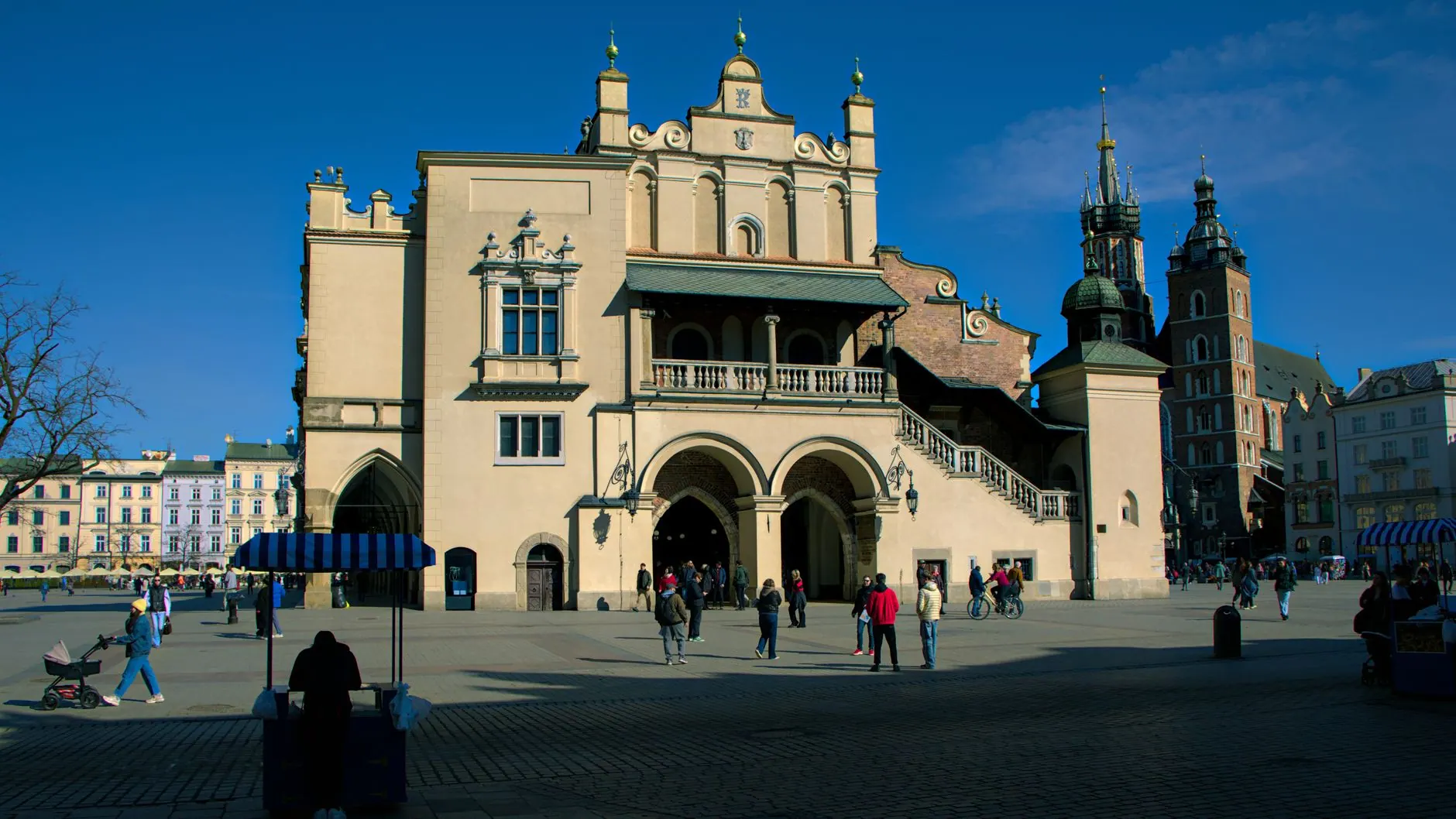
The trumpet stops mid-note. Below the taller tower of St Mary's Basilica, a group in matching T-shirts looks up, confused, as the melody breaks off and the crowd in the Main Square goes back to its coffee. Nobody played a wrong note. The tune is meant to end that way, and it has been cut short like that for centuries. Krakow is full of small moments like this, and the groups that notice them tend to have a far better weekend than the ones who only see the bars.
This Krakow mini-guide keeps the stag do and group weekend angle, but it is built to stop the weekend going wrong. It covers the Old Town and Kazimierz, the cellar bars and how to avoid inflated bills, Polish food and drink worth ordering, daytime trips that are genuinely good, and the local rules that catch out visiting groups.
Why Krakow works for a group weekend
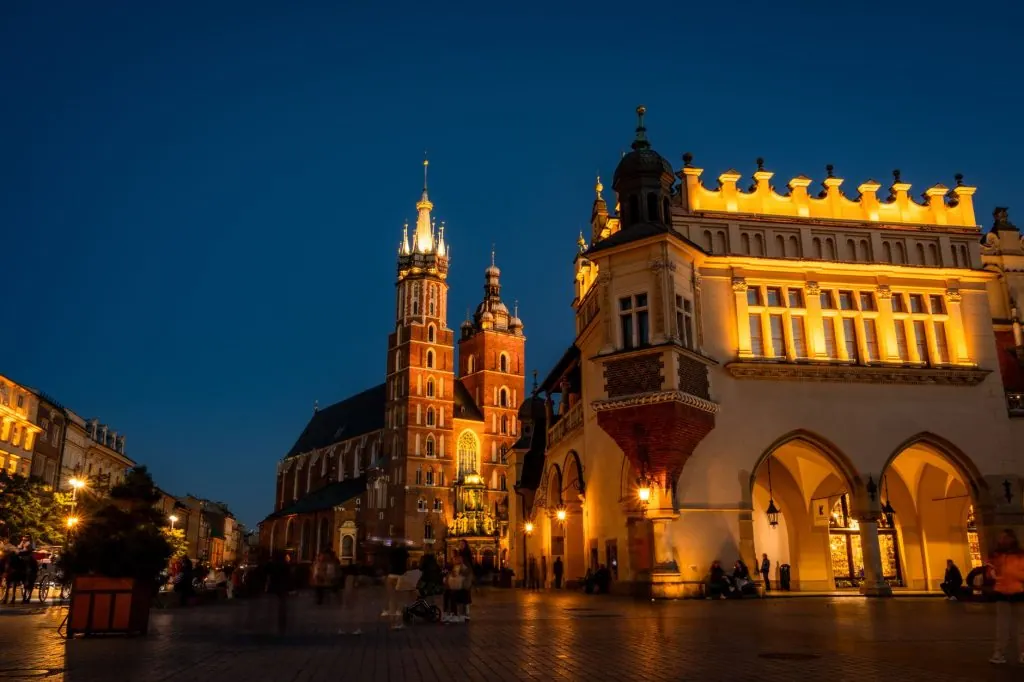
Krakow was Poland's royal capital, and its medieval centre came through the wars largely intact. The Old Town is a UNESCO World Heritage Site, and almost everything a group wants sits inside a compact ring: the square, the bars, the restaurants, the castle hill and the river. That matters more than it sounds. A group of ten loses an hour every time it has to agree on transport. In Krakow you mostly walk.
The second reason is variety. The Old Town and Kazimierz feel like two different cities a short walk apart. The first is grand, busy and built around monuments. The second is smaller, scruffier and more local, with courtyards, market stalls and bars spread through old tenement buildings. A weekend that uses both feels much fuller than one spent on the same street.
The third is that the daytime options are strong enough to carry a group through a hangover: a castle on a hill, a salt mine with chapels carved underground, and river paths for a slow afternoon. If your group is weighing up other cities, Prague Beyond the Bridge: Quiet Streets, Hills and Views and Budapest by Day and Night: Two Banks, Thermal Baths and Ruin Bars cover two obvious alternatives. Krakow's edge is how close together everything is. Residents are used to stag groups, but patience has limits, and fines and evictions are a real risk for groups who ignore the local rules.
The Main Square: St Mary's, the hejnal and the Cloth Hall
Everything starts at Rynek Główny, the Main Square, a vast medieval market square ringed with townhouses, café terraces and churches. It is the obvious meeting point when a group splits up, so agree on one landmark on the first evening. The statue of the poet Adam Mickiewicz, near the middle of the square, is the traditional local choice.
St Mary's Basilica and the hejnal
The brick Gothic St Mary's Basilica dominates one corner, its two towers deliberately unequal in height. Inside, the carved wooden altarpiece by Veit Stoss is the star, a huge, detailed piece that is opened at a set time each day. It is a working church, so visitors use a separate entrance from worshippers and there is a ticket for sightseeing. Check current arrangements on the official site, and do not walk in during Mass with a group.
From the taller tower, a trumpeter plays the hejnał mariacki on the hour, sounding it in several directions. The melody breaks off abruptly. The best-known story says it honours a watchman shot through the throat by an arrow as he sounded the alarm. True or not, standing in the square as the notes stop is one of the simplest free things to do in the city.
The Cloth Hall and beneath the square
The long arcaded building in the middle is the Sukiennice, the Cloth Hall, once a hub of the textile trade. Its ground floor is still a market hall, lined with stalls selling amber, wooden toys, lace and souvenirs. Upstairs is a gallery of Polish painting, and below the square an underground museum shows the medieval trading town beneath the cobbles. Nearby stand the Town Hall Tower, all that is left of the old town hall, and the small church of St Adalbert.
The terraces on the square charge for the view: fine for one drink, less sensible for a full night. Horse-drawn carriages also wait here. Some visitors are uneasy about horses working long hours on hard cobbles in summer heat, so decide for yourselves rather than booking one as a joke for the stag.
The Royal Road, the Planty and Wawel Hill
A good introduction to the Old Town is the Royal Road, the old coronation route. It begins at the Barbican, a round brick fortification, passes through the Florian Gate, one of the few surviving parts of the city walls, runs down Floriańska Street to the Main Square and continues along Grodzka Street to Wawel Hill.
The Planty
Where most of the walls once stood is the Planty, a ring of park with paths, benches and trees circling the entire Old Town. It is the city's living room: students, dog walkers, families and older residents on benches. Use it to sit in the shade, walk off a late breakfast, or cross the Old Town without fighting the crowds. It is also a handy way to get your bearings, since every street heading inwards leads back towards the square. It is not a place to drink: the ban on public alcohol applies here too.
Wawel Hill
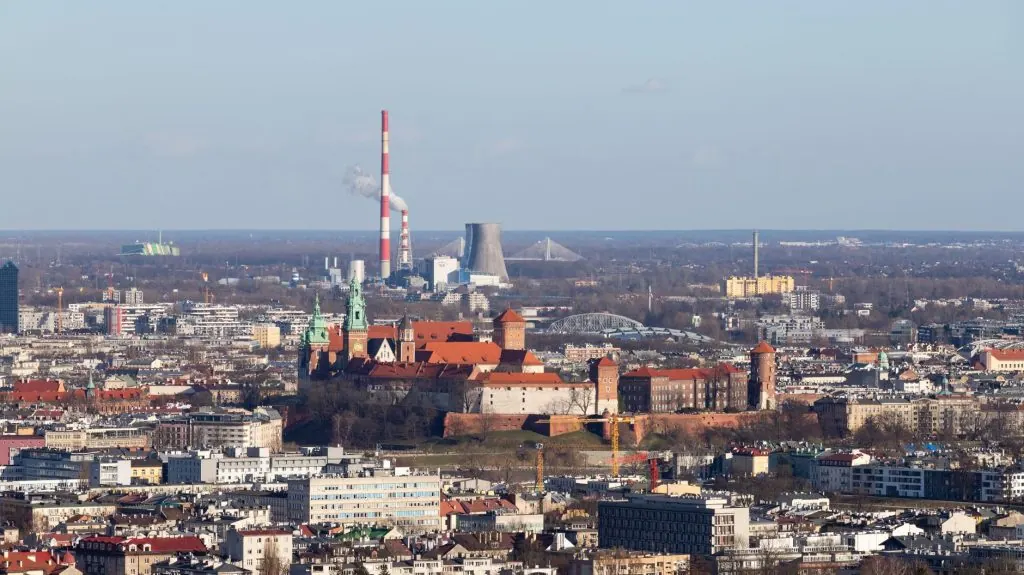
At the southern end of the Old Town, a limestone hill above the Vistula carries Wawel Royal Castle and Wawel Cathedral, the coronation and burial place of Polish kings. The castle courtyard, with its Renaissance arcades, is open to walk into, while the state rooms, royal apartments and treasury each need their own ticket. Inside the cathedral, a narrow wooden stair leads up to the Sigismund Bell, rung only on major national and religious occasions.
Castle exhibition tickets are often timed and limited, and popular routes sell out at busy times. Check the official Wawel website and book ahead if the group wants to go inside. The cathedral is a place of worship, so keep voices down and leave costumes and props at the hotel.
The dragon
Below the hill on the riverside is the Wawel Dragon statue, a metal beast that breathes real fire at intervals. It refers to the legend of a dragon living in a cave beneath the hill, killed when a clever cobbler fed it a sheep stuffed with sulphur. The cave itself, the Dragon's Den, can be visited from the hill in the warmer months, and you come out by the statue. It is a cheerful stop and a natural group photo.
Kazimierz after dark and in daylight
South-east of the Old Town, Kazimierz was for centuries a separate town and the centre of Jewish life in Krakow. Its large Jewish community was almost entirely destroyed in the Holocaust. Today it is the city's most interesting district by day and its most relaxed night-out area after dark. A group that keeps both facts in mind will behave better there.
Daytime Kazimierz
Walk Szeroka Street, the broad heart of the old Jewish town, where the Old Synagogue now houses a museum and the Remuh Synagogue sits beside a historic cemetery. Cover up, keep the volume down and treat these as places of remembrance. Across the river in Podgórze, the wartime ghetto area, Oskar Schindler's Enamel Factory holds a museum on the city under occupation that is well worth a morning. The Father Bernatek footbridge links the two districts.
Plac Nowy and zapiekanki
The centre of Kazimierz is Plac Nowy, a square with a round brick market building in the middle. By day it hosts market and flea-market stalls. At night the hatches around the rotunda sell zapiekanki, long halves of baguette topped with mushrooms and melted cheese, extra toppings and a stripe of ketchup. Queueing for one at the end of a night out is practically a Krakow ritual.
The residents
Kazimierz bars tend to be smaller and quirkier than in the Old Town, with mismatched furniture, candlelit rooms and courtyards. But people live above almost every bar. Shouting, singing in the street and noise in stairwells are the commonest complaints about visiting groups. Move between bars quietly, keep the group on the pavement rather than spread across the road, and never use courtyards or doorways as toilets.
Cellar bars and nights out without the rip-offs
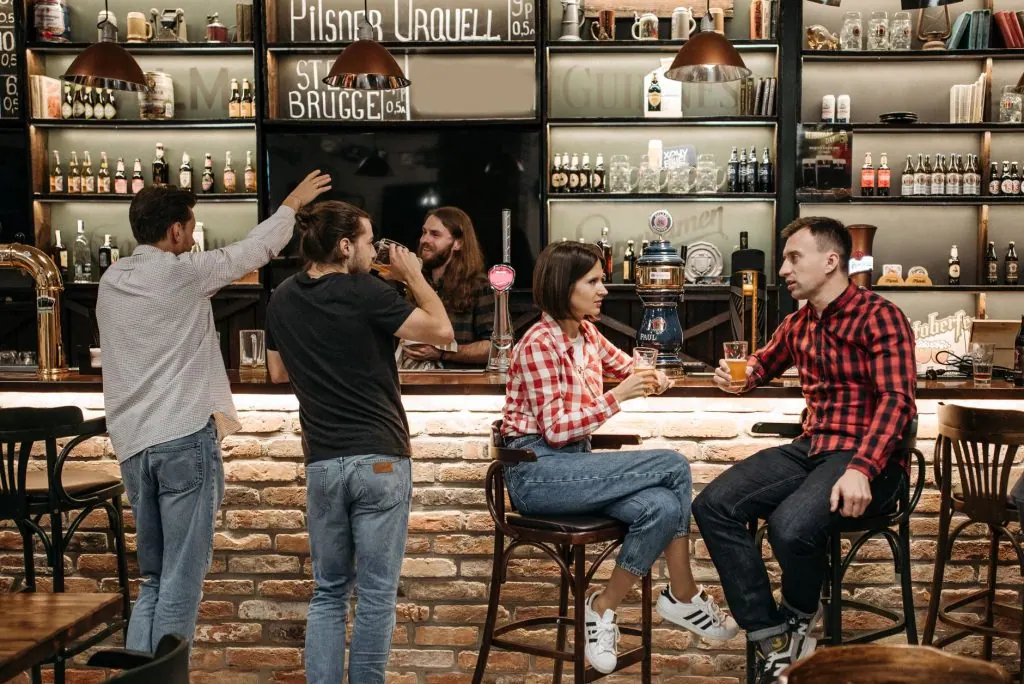
Many of the old townhouses around the square and along the side streets have vaulted brick cellars, and a lot of them are now bars and clubs. Going down a narrow stair into a low, arched room full of people is one of the great pleasures of a night in Krakow. Locals tend to eat first and go out later than British groups expect, so pace the night: eat properly, order water between rounds, and stick to one or two areas rather than a cross-city crawl.
Door policy
Many clubs operate a door selection, and large male groups in matching outfits are often turned away. Splitting into twos and threes, dressing smart-casual and staying sober enough to talk to the door staff helps a lot. Sportswear and flip-flops cause problems at stricter venues.
Street promoters and inflated bills
This is the most important warning in this guide. Around the square and nearby streets, promoters approach groups with offers of free entry, free drinks or a better party round the corner. Some lead to venues, often strip clubs, where drinks are charged at absurd prices, card terminals are used out of sight, and huge sums appear on the bill. The UK government's travel advice for Poland has warned visitors about exactly this.
- Ignore promoters. Choose your own bars and do not follow anyone who approaches you on the street.
- Check prices first. Ask for the menu or price list before ordering, and walk out of any venue that will not show one.
- Pay as you go. Settle each round when you order rather than running a tab.
- Keep your card in sight. Never let it be taken into another room, and check the amount on the terminal before entering your PIN.
- Watch your drinks and do not accept them from strangers.
- Stick together. Nobody walks home alone or goes off to a second venue without telling the group.
If something goes wrong, call the police on the European emergency number, 112, and contact your bank straight away.
Polish food and drink to try
Polish food is hearty and exactly what a group needs between nights out. Milk bars, the traditional canteens serving simple home cooking, are worth seeking out for a fast, filling lunch.
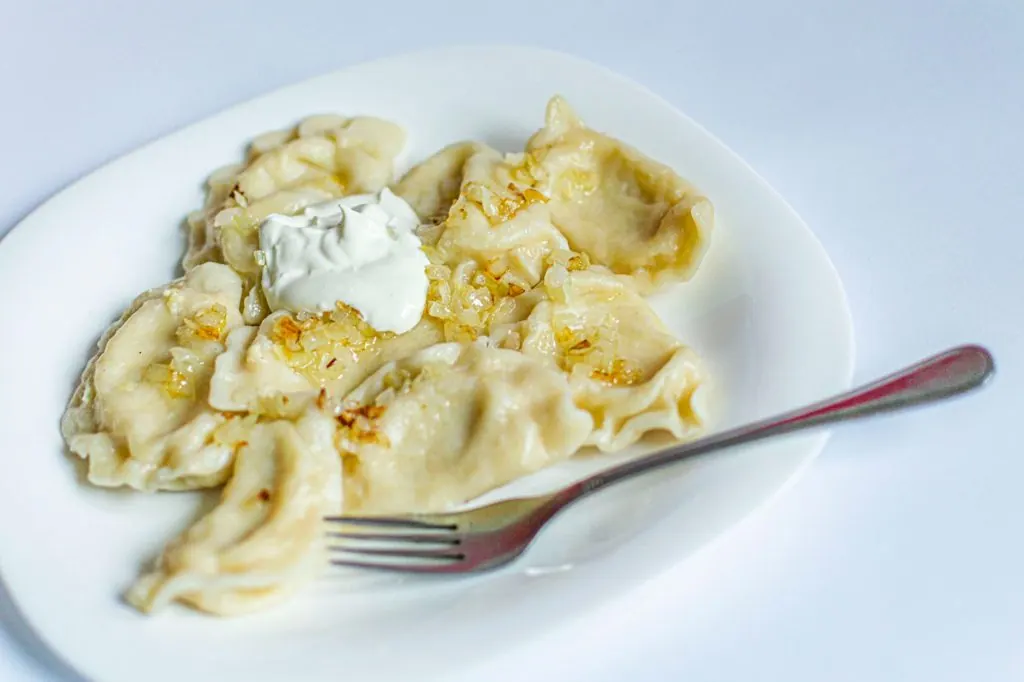
Dishes worth ordering
- Pierogi: boiled or fried dumplings. Ruskie are filled with potato and curd cheese, often topped with fried onions. Others come with meat, sauerkraut and mushroom, or sweet fruit in summer. A mixed plate lets the group try several.
- Żurek: a sour soup made from fermented rye, usually with sausage and a boiled egg, sometimes served in a hollowed-out bread loaf. It has a reputation as a hangover cure.
- Obwarzanek krakowski: the city's braided bread ring, sold from street carts all over the Old Town, plain or topped with salt, sesame or poppy seed. It has protected regional status.
- Kiełbasa: Polish sausage, grilled and served with bread and mustard, from restaurant menus to late-night street stands.
- Bigos: hunter's stew of sauerkraut, cabbage and mixed meats, cooked slowly.
- Oscypek: smoked sheep's cheese from the Tatra highlands, often grilled and served with cranberry.
Vodka, the Polish way
Vodka is Poland's national spirit, and the local way to drink it is nothing like mixing it with energy drinks. It is served well chilled, neat, in small glasses, and drunk with food. Each round comes with zakąski, small bites such as pickled cucumbers, herring, or bread with lard. A shot follows a toast, na zdrowie, then a bite of food, not another shot straight away. Try rye and potato vodkas side by side, which taste noticeably different, and nalewka, sweet fruit or herb liqueurs that many families still make at home.
Beer styles
Most Polish beer is pale lager, served cold, but the craft scene has grown and many bars have long lists of local brews. Look out for Baltic porter, a strong, dark, smooth style, and Grodziskie, a light, smoky wheat beer revived from an old Polish tradition.
Tipping is customary in restaurants for good table service. Be careful saying "thank you", dziękuję, as you hand over money: it can be taken to mean "keep the change".
Days out: Wieliczka, the Vistula and a separate day at Auschwitz-Birkenau
Wieliczka Salt Mine
Just south-east of the city, the Wieliczka Salt Mine is a UNESCO World Heritage Site where miners carved chambers, statues and whole chapels out of rock salt. The highlight is the Chapel of St Kinga, an underground church where even the chandeliers are made of salt crystals. Visits are guided only and involve a long descent by staircase and plenty of walking. It is cool underground all year, so bring a layer, and book on the official website, especially for an English-language tour.
The Vistula boulevards
Below Wawel, the Vistula boulevards run along both banks of the river, with grassy slopes, cycle paths and moored boats. It is a good place for a slow, sober recovery afternoon, and some boat trips leave from the quays below the castle. The riverbank counts as public space, so no open cans.
Auschwitz-Birkenau: a separate, sober day
The former German Nazi concentration and extermination camp at Oświęcim is now the Auschwitz-Birkenau State Museum, a long drive west of Krakow that needs a full day. If your group goes, treat it as its own day, never part of the stag. Book entry in advance through the official Memorial website, where places with an educator frequently sell out. Go rested and sober, dress respectfully, and leave costumes, flags and group T-shirts behind. Many visitors find the day overwhelming, so plan a quiet evening afterwards, and accept that some of the group may opt out.
Active options
Companies on the outskirts run go-karting, paintball, shooting ranges and quad biking for groups. Check safety briefings and insurance, and walk away from any operator that lets people drink first.
Rules, respect and getting around
The rules that catch groups out
- No drinking in public. Poland bans drinking alcohol in streets, squares, parks and other public places, including the Planty and the riverbanks. Municipal and regular police issue fines on the spot. Drink in licensed bars and restaurants or in your accommodation.
- Carry ID. Bars and clubs may ask for photo ID, and police may ask to see identification. Carry a passport or photo ID card and keep a copy on your phone.
- Public urination and disorderly behaviour bring fines and, in serious cases, arrest.
- Jaywalking is fined. Cross at marked crossings on the green light, even when the street looks empty.
Accommodation
Many apartments and hotels in the Old Town and Kazimierz refuse stag groups or set strict conditions: a damage deposit, limits on guests and night-time quiet hours, which neighbours enforce by calling the police. Read the house rules, declare the group honestly, and do not plan a party in a rented flat. A slightly less central hotel used to groups usually works better than a cheap apartment above someone's family.
Getting there and around
Krakow's airport is at Balice, west of the city, with a train link to Kraków Główny, the main station next to the Old Town. Trams and buses cover anything you do not want to walk. Buy tickets from machines and validate paper tickets straight away, because inspectors issue fines; check current fares on the official city transport site. For taxis, use clearly marked licensed cabs from official ranks or booked through a recognised service, and avoid unmarked cars touting outside clubs and stations. Make sure everyone has the accommodation address saved on their phone.
A simple shape for the weekend
- Friday: arrive, walk the Royal Road, dinner in the Old Town, a relaxed first night in the cellar bars.
- Saturday: obwarzanki and coffee, Wawel Hill and the dragon, an activity or the boulevards, then dinner and a night out in Kazimierz ending at Plac Nowy.
- Sunday: żurek for the recovery, the Wieliczka Salt Mine or Schindler's Factory, and a quiet last meal before the flight.
Save Auschwitz-Birkenau for an extra day of its own. Pay for every round as you order it, walk past every promoter, and be back in the square to hear the hejnal break off before you fly home.
Official sources and further reading
Opening times, entry rules and prices change, so check them on the official sites before you travel:
- Visit Krakow: The official tourism portal of Krakow.
- GOV.UK: foreign travel advice: Entry rules, safety and health notices for every country, kept up to date by the UK government.