 By
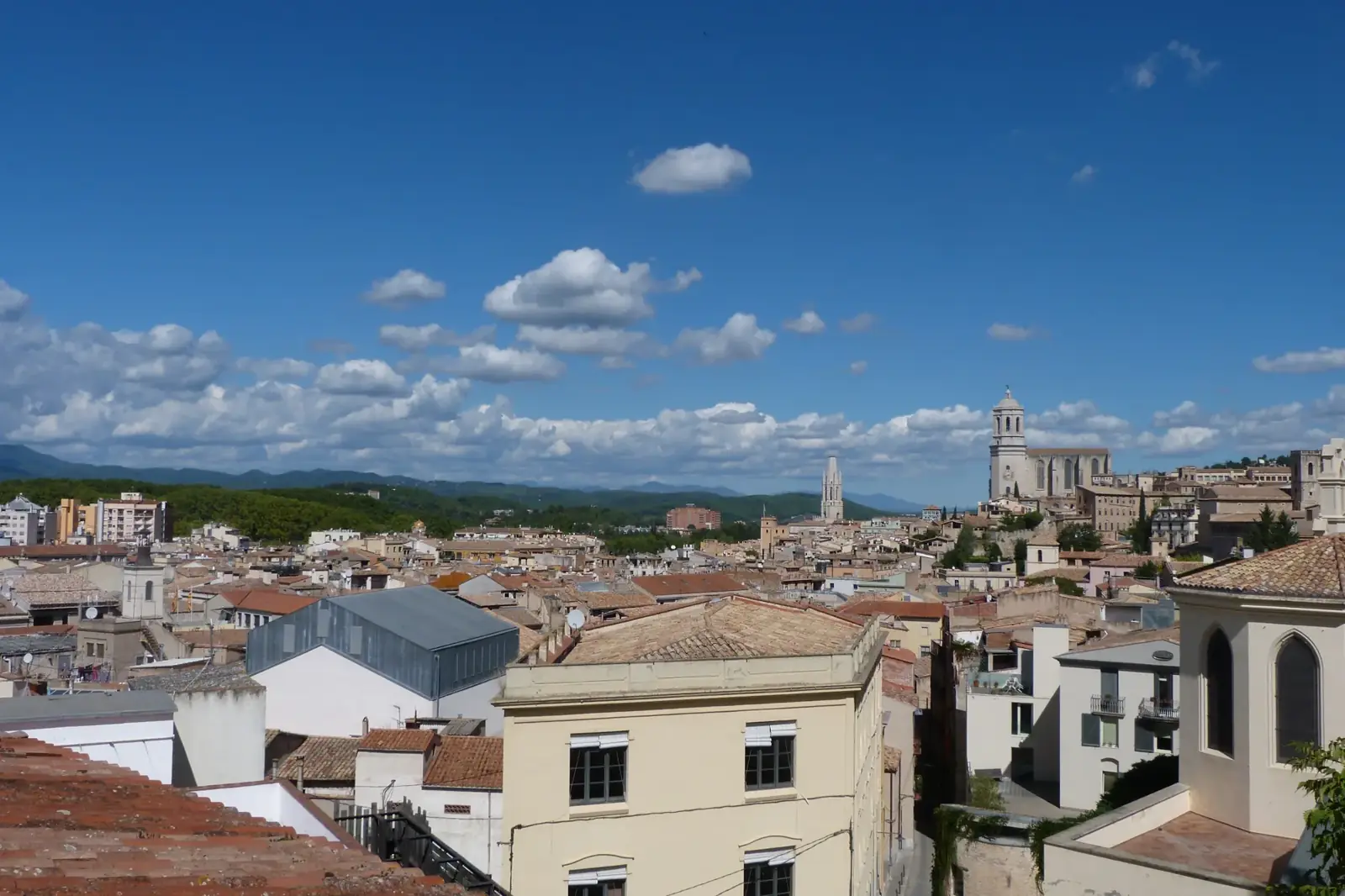
Stand in the middle of the red iron footbridge over the River Onyar and look upstream. A row of tall, narrow houses in ochre, rust, cream and pink rises straight out of the water, their windows and laundry lines hanging over the river, with the cathedral's bell tower and the spire of Sant Feliu poking above the rooftops behind them. It is the view on every postcard of Girona, and it is the right place to start, because almost everything worth seeing in the old town is within a short, steep walk of where you are standing.
This Girona travel guide covers the river houses and the bridges, the cathedral and its famous steps, the walk along the medieval walls, the Jewish quarter and the smaller sights in between. It also deals with the practical side: how much time to give the city, how to cope with the hills, what to eat, and which day trips into the province earn their place.
The river houses and the bridges of the Onyar
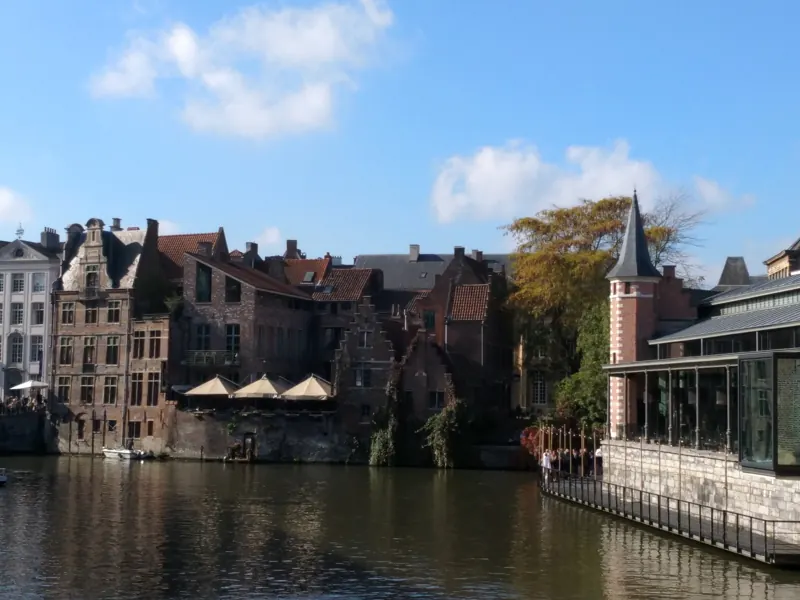
The Cases de l'Onyar, the houses along the river, are the first thing most visitors want to see, and they look best from the bridges rather than from the riverbanks. The houses were once the backs of buildings that faced inward to the old town, with the river as a working edge of the city. Their bright colours are not ancient: they come from a deliberate restoration and repainting project that turned a shabby waterfront into the city's signature view.
The Eiffel bridge
The most photographed crossing is the Pont de les Peixateries Velles, the old fishmongers' bridge, a red-painted iron footbridge with a latticed frame. It is widely known as the Eiffel bridge, because it was built by the company of Gustave Eiffel, the engineer behind the tower in Paris. It is narrow, and at busy times people stop in the middle for photographs, so cross it early in the morning if you want the view to yourself.
Other crossings worth using
The Pont de Pedra, the stone bridge, is the main crossing between the old town and the newer district on the west bank, and it gives a wider view of the house fronts. Several other footbridges link the two sides within a few minutes' walk. Cross back and forth a few times as you explore: the light on the houses changes through the day, and the reflections are strongest when the water is calm, usually in the morning or towards evening.
On the west bank, the arcaded Plaça de la Independència is a lively square of terraces and the obvious place to sit down after a morning on the other side. It sits in the Mercadal district, which is flat, modern by comparison and where much of the city's everyday shopping happens.
The Barri Vell: walking the old town
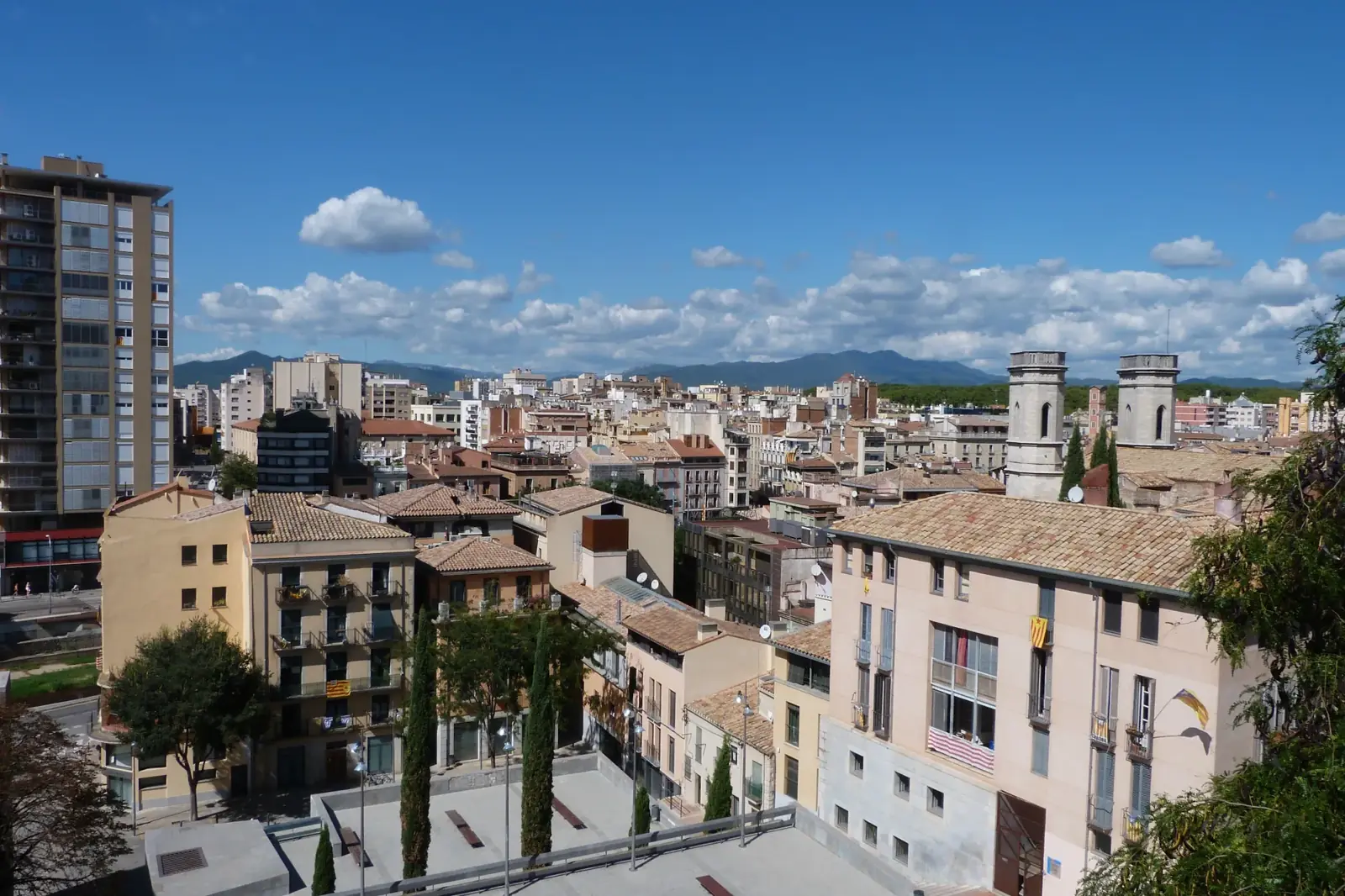
The Barri Vell, the old quarter, rises up the hill on the east bank of the Onyar. It is compact, but it is built on a slope, so streets turn into stairways without warning and many lanes end in a set of steps rather than a road. That is a large part of its charm, and also the main thing to plan around.
The Rambla and the lower town
The natural starting point is the Rambla de la Llibertat, a short, arcaded promenade that runs parallel to the river. It is lined with terraces and shops under stone arches, and it is where locals walk in the evening. Its arcades are also useful on wet days. From here, small streets lead uphill into the older core.
Carrer de la Força and the upper town
Carrer de la Força is the spine of the old town. It follows the line of the Roman road that once passed through the city, and it climbs gently north towards the cathedral, with medieval houses, small museums and doorways into hidden courtyards along the way. Side streets branch off into the old Jewish quarter, and higher up, the lanes become quieter and more residential.
The easiest way to understand the old town is to walk it twice: once uphill along Carrer de la Força to the cathedral, and once back down through the side lanes and stairways. Comfortable shoes with grip matter more here than in most Spanish cities, because the stone steps can be slippery after rain.
Girona Cathedral: the steps, the nave and the Tapestry of Creation
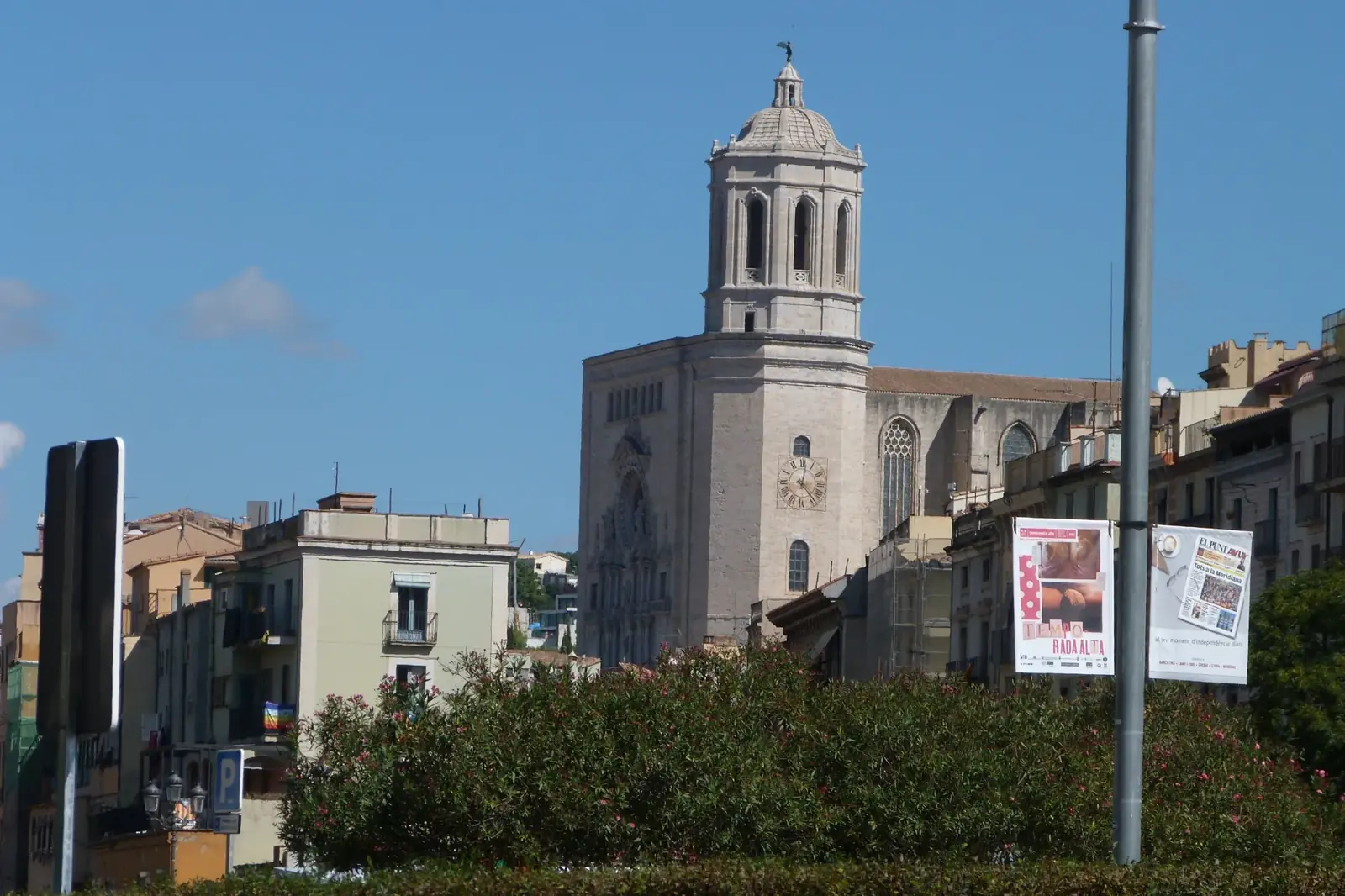
The cathedral of Santa Maria dominates the top of the old town, and seeing it from below is half the experience. Approach it along Carrer de la Força and it appears suddenly at the end of the street, raised high above a square.
The Baroque staircase
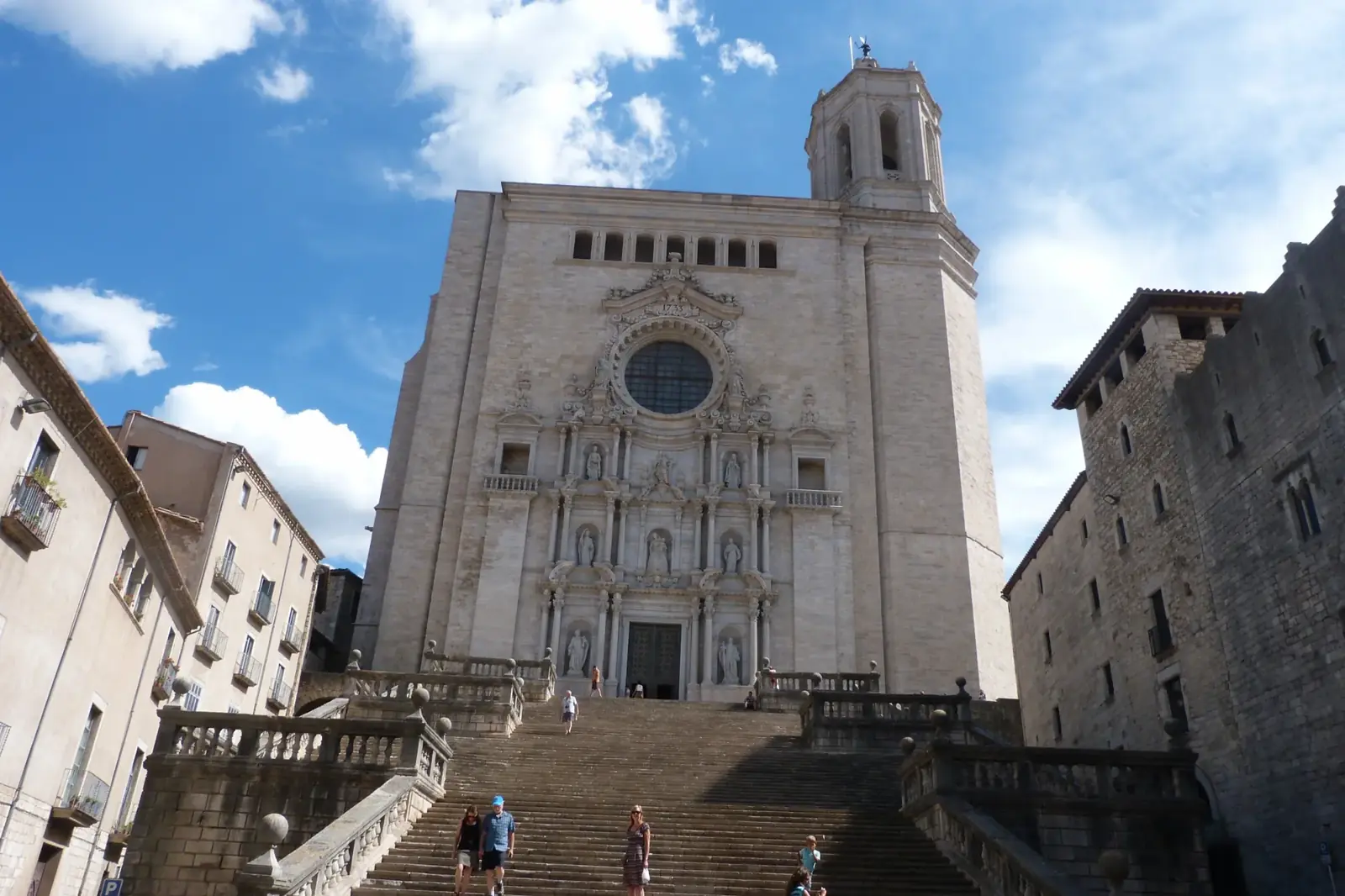
The cathedral is reached by a long, wide Baroque staircase that climbs from the Plaça de la Catedral to the main façade. It is one of the most recognisable sights in Catalonia, and it is a good place to sit for a few minutes and watch the square below. The climb is steady rather than difficult, but it is in full sun for much of the day, so take it slowly in the warmer months. Visitors who find steps hard should ask about step-free access when checking the visit details, rather than assuming the main flight is the only way up.
The Gothic nave
Inside, the surprise is the space. Instead of the usual central aisle with side aisles, the cathedral has a single, enormous Gothic nave, famously wide, with no columns to break the view. Medieval builders debated whether such a vault could stand at all. Stand at the back and let your eyes adjust: the scale is easier to feel in the quiet than to describe. The cloister, older and Romanesque in style, has carved capitals worth looking at closely.
The Tapestry of Creation
In the cathedral museum, the highlight is the Tapestry of Creation, a Romanesque embroidered hanging that shows the creation of the world in a circular design, with Christ at the centre surrounded by scenes of the days of creation, the seasons and the winds. It is a rare survivor of its kind and well worth time. Look for the small details: animals, figures and labels stitched into the fabric.
Visiting practicalities
The cathedral is an active place of worship, so dress modestly and expect parts to close during services. Entry has in the past included an audio guide and access to the museum, and it has sometimes been combined with the basilica of Sant Feliu. Ticket arrangements and opening hours change, so check the official website before you go. Mornings are quieter than late afternoon.
The Passeig de la Muralla: walking the medieval walls
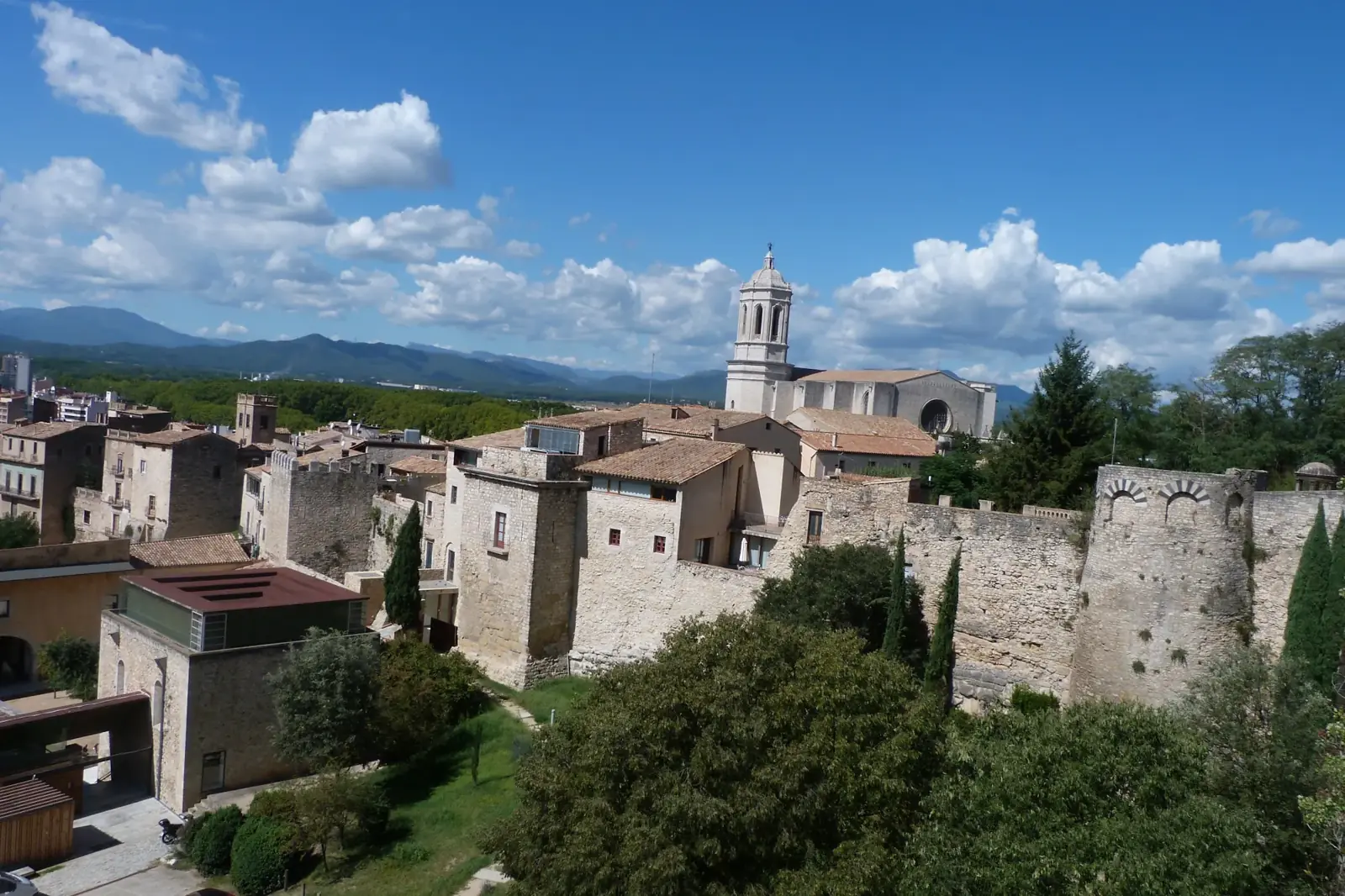
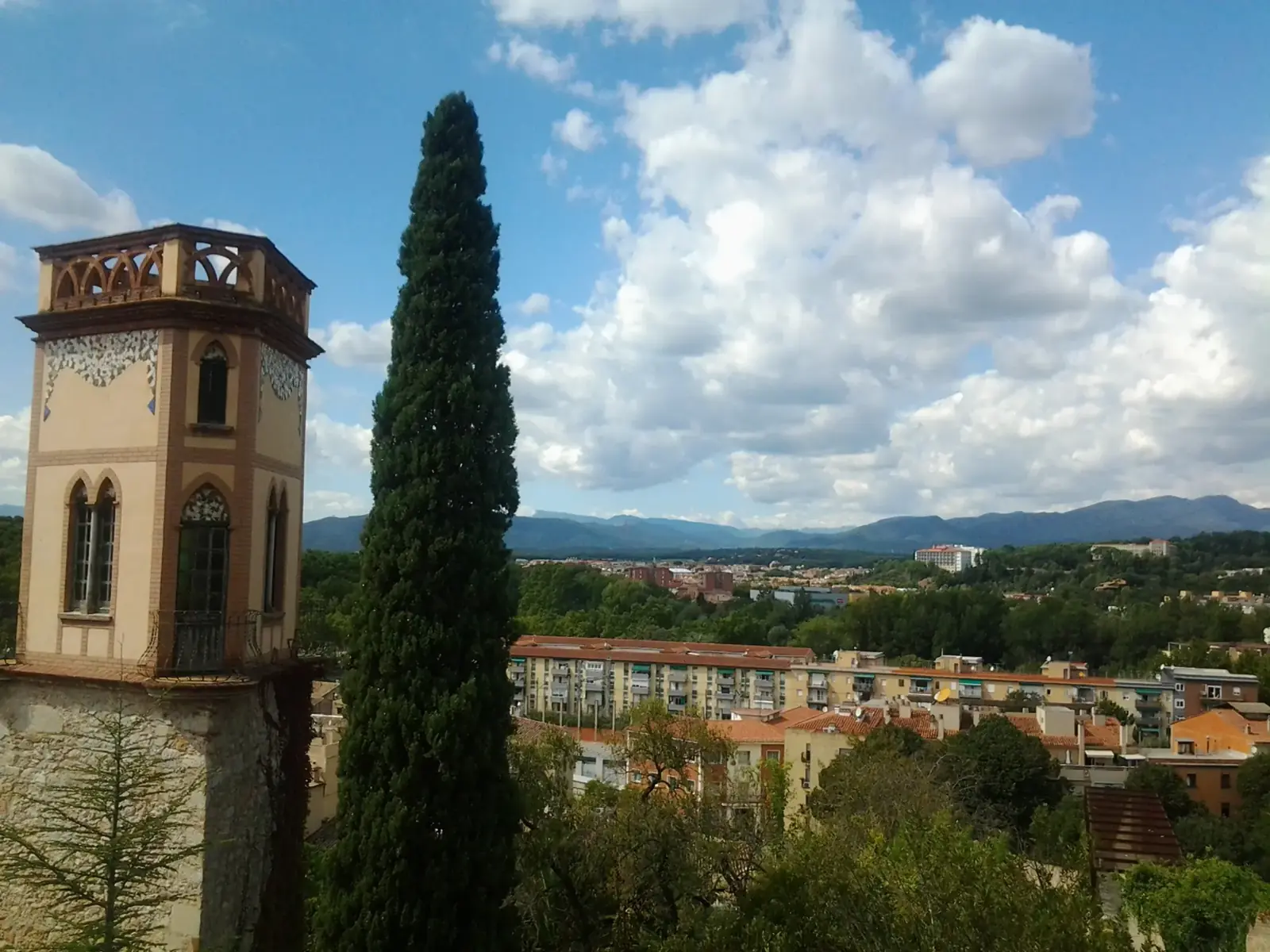
The Passeig de la Muralla is a walkway along the top of the city's medieval walls, and it is the best way to understand how Girona sits in its landscape. The walls wrap around the eastern and southern sides of the old town, and the path along them runs past towers, gateways and stretches of battlements, with views over the rooftops on one side and the hills on the other.
How the walk works
There are several access points, including near the southern end of the old town and close to the cathedral, so you can walk the whole route or just a section. The path is uneven, with frequent steps up and down to the towers, and parts are narrow with low parapets. It is not suitable for pushchairs or for anyone unsteady on their feet. Walk it in the morning or late afternoon: there is little shade on the open stretches.
The best stretches
The northern section near the cathedral is the most rewarding. Climb the towers along the way for views across the cathedral roof, the bell tower and the spire of Sant Feliu, and down into the gardens below the walls. The Jardins de la Francesa, a small garden tucked against the walls behind the cathedral, is a quiet place to rest. Nearby, the ruins of the Torre Gironella, part of the old fortifications, add another viewpoint.
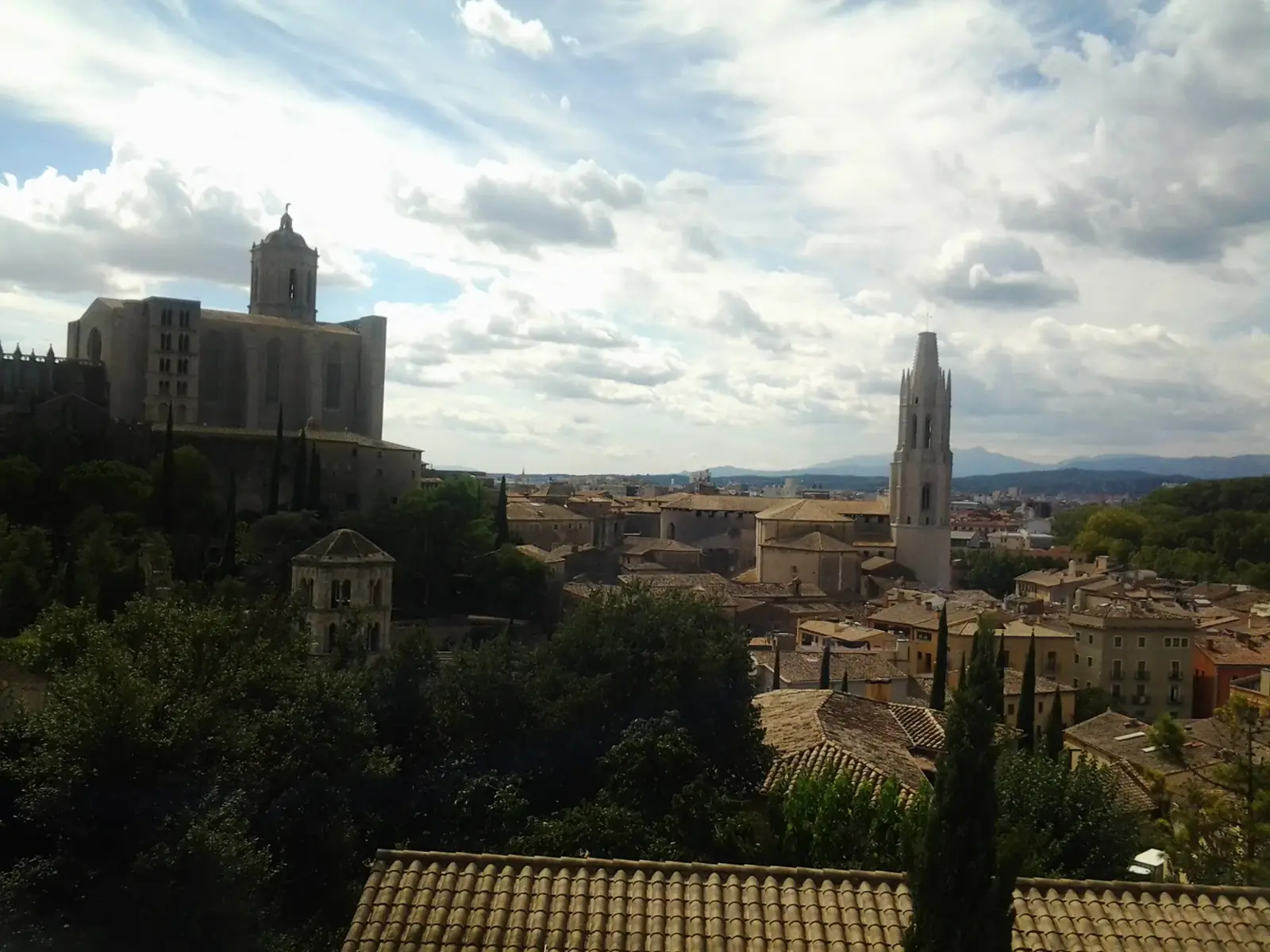
If you only have time for one part of the walls, start near the cathedral, walk south to the first few towers for the views, and come down into the old town. The rest of the route is pleasant but less dramatic, so keep it for a second visit.
The Call, the Arab Baths, Sant Feliu and the lion
Some of Girona's most interesting sights are small, and they are clustered in the streets between the cathedral and the river.
The Call and the Museum of Jewish History
The Call, Girona's medieval Jewish quarter, is a tangle of narrow, steep lanes and stairways around Carrer de la Força. A Jewish community lived here for centuries until the expulsion of the Jews from Spain, and the medieval street pattern has survived remarkably intact. The Museum of Jewish History, in the Bonastruc ça Porta centre, explains the community's life, its scholars and its end, with gravestones and documents. It is small and thoughtful, and gives meaning to the lanes outside. Walk the alleys slowly: their shape, with tight passages and steps, follows the original medieval layout.
The Arab Baths
The Banys Àrabs, the Arab Baths, are not actually Arab. They are a Romanesque bathhouse, built by Christian Girona and modelled on the Roman and Islamic bathing tradition, with a cold room, a warm room and a hot room. The highlight is the changing room, where slender columns ring a small octagonal pool under a lantern-like skylight. It is a short visit, so combine it with the nearby monastery of Sant Pere de Galligants, a Romanesque building that houses the archaeological museum.
The basilica of Sant Feliu
Just below the cathedral, the basilica of Sant Feliu is easy to recognise by its truncated spire, which was never finished to its full height. Inside are early Christian and Roman sarcophagi set into the walls, carved with scenes that predate the church itself. It is often far quieter than the cathedral and worth seeing for that alone.
The lion of Girona
Outside Sant Feliu, a small stone lioness clings to the top of a column. Local custom says that anyone who wants to return to Girona must kiss her bottom, and visitors queue to climb the small steps and do so. It is harmless fun, but the steps are steep, so take care, and be patient when it is busy.
Girona on screen
Girona has been used as a filming location for a famous fantasy television series, and fans recognise the cathedral steps and the old town's lanes. Guided walks for fans run in the city, but the places themselves need no tour: the cathedral, the steps and the stairways of the old town are all free to walk past.
Food, festivals and cycling
Girona is a serious food city. The province has a strong restaurant reputation, from simple places serving Catalan home cooking to ambitious kitchens that draw diners from across Europe. You do not need a reservation at a famous table to eat well here, but the more ambitious places book up far ahead, so plan early if that is your aim.
What to order
- Pa amb tomàquet, bread rubbed with tomato, olive oil and salt, served with almost everything.
- Botifarra, Catalan pork sausage, often grilled and served with white beans as botifarra amb mongetes.
- Fuet, a thin cured sausage, good for picnics on the walls.
- Suquet de peix, a fish and potato stew from the Costa Brava.
- Crema catalana, a set custard with a burnt sugar crust, Catalonia's answer to crème brûlée.
- Xuixos, Girona's own pastry: a fried, sugar-coated roll filled with custard. Buy them fresh from a bakery in the morning, when they are still warm.
Lunch is the main meal, and many restaurants serve a set midday menu, the menú del dia, on weekdays. It is usually the best value way to eat well. Dinner starts late by British standards, and kitchens in the old town fill quickly at weekends.
Temps de Flors
In spring, the city hosts Temps de Flors, a flower festival when courtyards, churches, stairways and monuments are filled with floral installations, including the cathedral steps. It is a lovely time to visit, but the old town becomes crowded and accommodation fills early. Check the festival's official dates before booking.
A base for cycling
Girona has become a well-known base for road cyclists, including professional riders who live and train in the area. The surrounding countryside offers quiet roads, rolling farmland and serious climbs, such as the road up to the Santuari dels Àngels. For gentler riding, the Ruta del Carrilet greenway follows old railway lines from Girona towards Olot in the volcanic hills and towards the coast at Sant Feliu de Guíxols, with gentle gradients. Bike hire, including road bikes, is easy to find in the city.
Day trips from Girona
Girona sits in the middle of a varied province, and some of its best days out are within an hour or so. A car makes the countryside much easier, though trains and buses cover several of the main destinations.
- Figueres and the Dalí Theatre-Museum: a short train ride north, Figueres is home to the Dalí Theatre-Museum, the surreal museum the artist designed himself, with the egg-topped building and his crypt. Queues are long in summer, so book ahead online.
- Besalú: a medieval town with a fortified stone bridge over the river, a well-preserved Jewish quarter with a ritual bath, and narrow streets that are best explored early before the coach groups arrive.
- The Garrotxa volcanic area: around Olot, the volcanic zone of La Garrotxa has extinct volcanoes, crater walks such as Santa Margarida, and the beech forest of the Fageda d'en Jordà, which grows on old lava. It is walking country rather than a quick photo stop.
- The Costa Brava: the coast offers rocky coves, fishing villages and the coastal footpaths known as the camins de ronda. Calella de Palafrugell, Llafranc and Tamariu are small and pretty, Tossa de Mar has a walled old town above the beach, and Cadaqués, further north, is whitewashed and remote. Inland, the medieval villages of Pals and Peratallada pair well with a coastal afternoon.
In summer the coast is busy and parking near the coves fills early, so go early in the day or out of season. Check bus and train timetables the day before, especially at weekends.
Practical Girona: getting there, hills and how long to stay
Getting there
Many UK visitors fly direct into Girona's own airport, which lies a short drive from the city, with buses and taxis into the centre. Others fly into Barcelona and take the high-speed train, which reaches Girona quickly and makes the city easy to add to a Barcelona trip. Slower regional trains run along the same route and are cheaper. Check current timetables before travelling, since services change.
Hills and steps
The old town is hilly and full of steps, and the wall walk adds more. Anyone with limited mobility should focus on the lower old town, the river and the Rambla, and check step-free access to the cathedral in advance rather than tackling the main staircase. Pushchairs are awkward in the upper old town and on the walls.
How long to stay
Girona can be seen in a long day trip from Barcelona, but that means rushing the cathedral, the walls and the Call, and missing the city in the evening, when the day-trippers leave and the old town becomes calm. Two nights is a better minimum: one full day for the old town and walls, and a second for a day trip or a slower look at the museums. With three or four nights, Girona makes a good base for the Costa Brava, Figueres and the volcanic hills.
Combining with Barcelona and further afield
A common plan is to spend a few days in Barcelona and finish with two or three nights in Girona, which feels quieter and more relaxed after the big city. If you are extending a Spanish trip south, Granada Travel Guide: The Alhambra, the Albaicín and the Tapas Habit and Seville in Slow Motion: Courtyards, Shade and Late Nights cover two very different cities in Andalusia.
Spring and autumn are the most comfortable seasons for walking the walls and climbing the steps. Summer is hot and busy, especially on the coast, while winter is quiet and often bright, with fewer crowds in the old town.
Arrive early, cross the Eiffel bridge before the crowds, climb to the cathedral, then walk the walls in the late afternoon light, and save the evening for a slow dinner in the old town after the day visitors have gone.
Official sources and further reading
Opening times, entry rules and prices change, so check them on the official sites before you travel:
- Catalunya (official tourism site): Catalonia's official tourism site, covering Girona and the Costa Brava.
- Costa Brava Girona (official): The official tourism board for the Girona province and the Costa Brava.
- GOV.UK: Spain travel advice: Entry requirements, safety and health advice for British travellers, kept up to date by the UK government.