 By
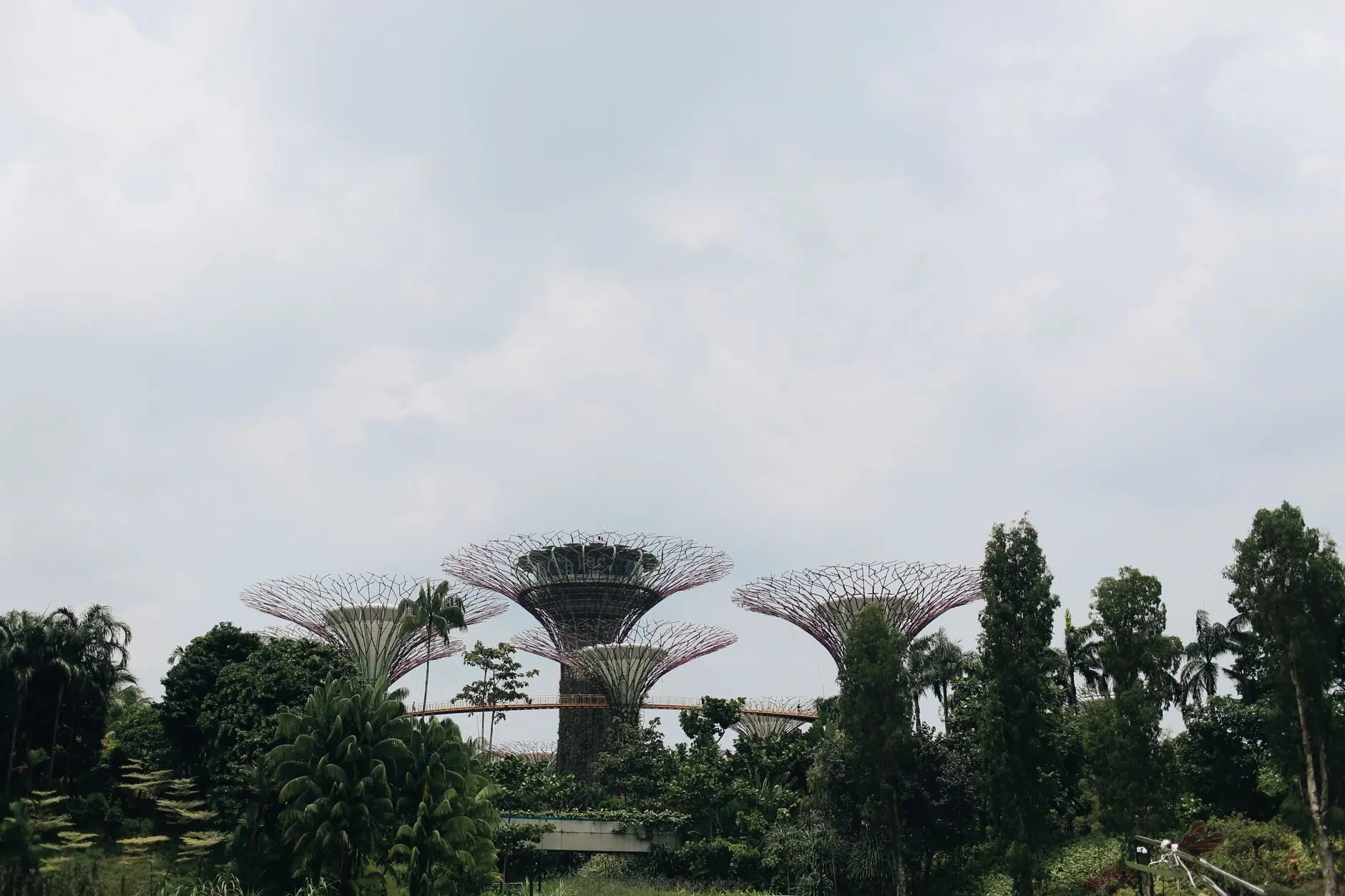
You come up the escalators from Bayfront MRT, walk out into heavy, wet air, and there they are: a cluster of steel trunks wrapped in ferns and orchids, rising above the treetops with the three towers of Marina Bay Sands behind them. A minute later you are inside a glass dome where the air is suddenly cool and a waterfall roars down the face of a plant-covered mountain. Few places in Singapore change the way you feel so quickly.
Gardens by the Bay is easy to rush. Many visitors buy a conservatory ticket, take a photo of the Supertrees and leave before dark, missing half of what makes it worth the trip. This guide sets out the real reasons to go, what each part actually involves, which areas are free and which are ticketed, and how to time a visit around Singapore's heat and sudden rain.
Reason one: the Cloud Forest and its indoor mountain
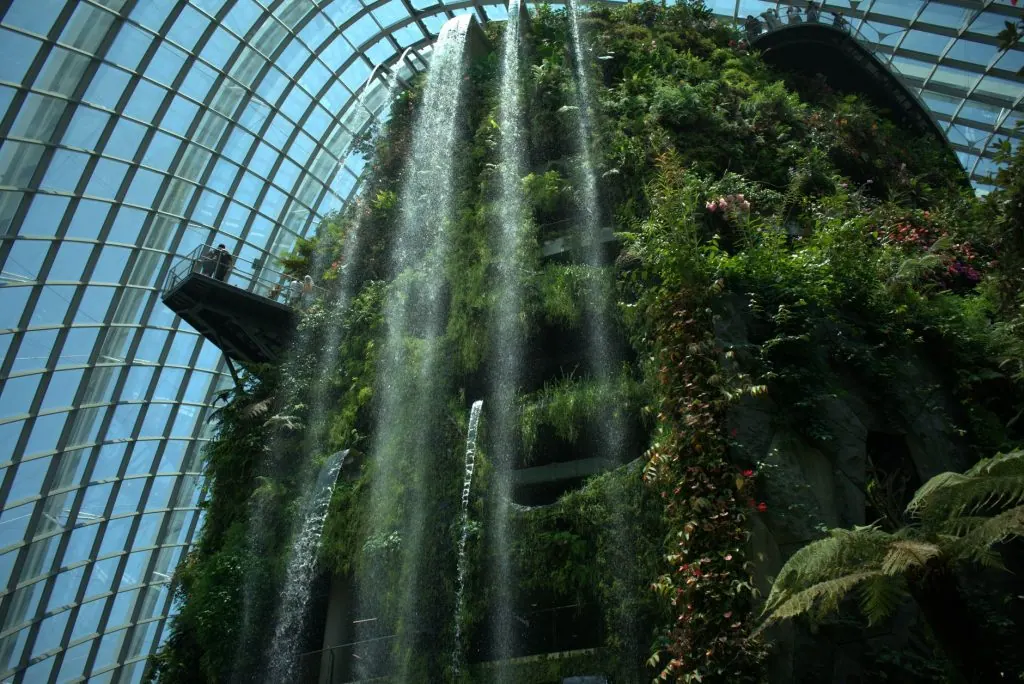
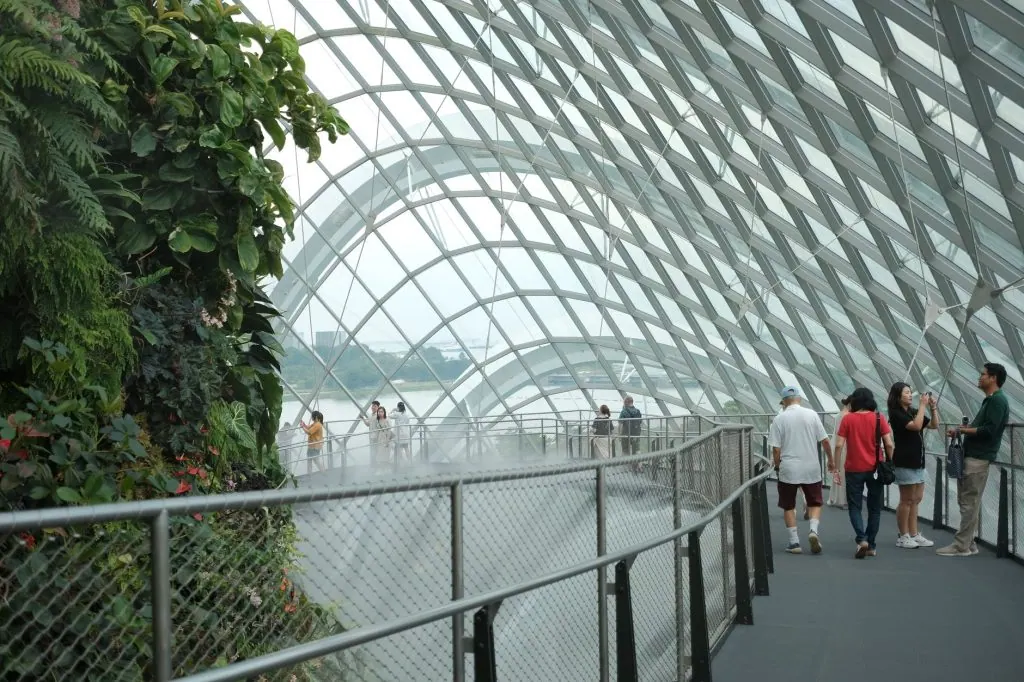
The Cloud Forest is the conservatory most people remember. Step through the doors and you face a tall artificial mountain clad from base to summit in living plants, with a waterfall pouring from the top into a pool at your feet. The air is cool and damp, closer to a tropical highland than to the city outside, and the noise of falling water fills the whole dome.
How the visit works
The layout is designed to be done top down. A lift takes you up inside the mountain to the summit area, often called the Lost World, where you find carnivorous plants such as pitcher plants alongside mosses and small highland species. From there you walk down on the Cloud Walk and the Treetop Walk, two aerial walkways that loop around the outside of the mountain and out over the dome. On the way down you pass through small galleries inside the mountain, with displays on crystals, caves and the threats facing cloud forests around the world.
The walkways give you the waterfall from above and from the side, and the view across the dome towards the bay. They are open and fairly narrow in places, so anyone uneasy with heights should know the drop is real, although the railings are solid. The lift and paths make most of the route accessible, but check access details for wheelchairs and pushchairs on the official site before you go.
The mist
At set times the conservatory releases a dense mist that rolls down the mountain and fills the lower levels. For a few minutes the walkways disappear into cloud and the whole place looks like a highland forest at dawn. It is the moment most photographers wait for. Ask staff at the entrance when the next misting is due, or check the official website, and plan to be on one of the walkways when it happens.
Go in light clothes but bring a thin layer. After the tropical heat outside, the cool, damp air can feel chilly within half an hour, especially for children.
Reason two: the Flower Dome and its changing displays
Next door, the Flower Dome is the Cloud Forest's opposite. Where one is wet and vertical, this one is dry, bright and spread out under a vast glass roof. The plants come from places with cool, dry seasons: the Mediterranean, parts of South Africa, Australia, California and the dry regions of South America. It is a strange and pleasant thing to walk among olive trees and succulents in the middle of the equatorial tropics.
The permanent gardens
Around the edges, a series of themed gardens represent these dry regions. Look for the baobab trees, with their swollen, bottle-shaped trunks, and the gnarled olive trees in the Mediterranean section, some of which are very old and were brought in from abroad. The succulent garden is full of cacti, aloes and other plants built to survive drought, and it is a good place to see how differently plants solve the same problem.
The Flower Field
The centre of the dome is the Flower Field, a large display that is changed several times a year. Some displays are built around a single flower, such as tulips or dahlias. Others follow the calendar, with themed displays for Lunar New Year, mid-autumn and Christmas. Because the display changes, the Flower Dome is the conservatory most worth revisiting, and it is the one where checking the current theme on the official site before booking makes the most difference.
Which dome to choose
If time or budget only allows one conservatory, the choice usually comes down to taste:
- Choose the Cloud Forest for drama, height, the waterfall and the misting. It is the stronger choice for first-time visitors and children.
- Choose the Flower Dome if you love gardens, want a calmer walk on level paths, or the current flower display appeals to you.
Most visitors who see both start with the Cloud Forest, while they have the most energy for the walkways, and finish in the Flower Dome, which is gentle on tired legs.
Reason three: the Supertree Grove and the OCBC Skyway
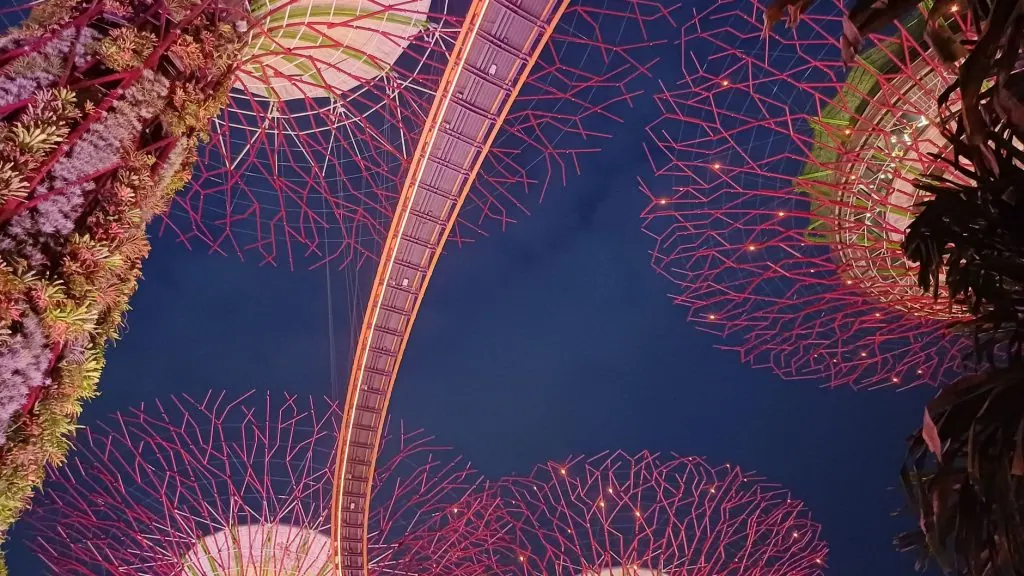
The Supertrees are the image everyone knows. They are tall, tree-shaped structures of steel and concrete, their trunks covered in a living skin of ferns, orchids, bromeliads and climbing plants. Their canopies spread out at the top like giant umbrellas, and the grove stands among real trees and lawns in the centre of the gardens.
More than decoration
The Supertrees are part of how the gardens work. Some collect rainwater, some carry solar panels, and some are linked to the conservatories and help vent hot air from the systems that cool them. Over time the planting on the trunks has thickened, so they look greener and more natural than they did when the gardens first opened.
Walking the Skyway
The OCBC Skyway is an elevated walkway strung between several of the Supertrees in the main grove. It is short, but it puts you up among the canopies, with views over the gardens, the domes and the Marina Bay skyline. It is ticketed separately from the conservatories, and it closes during heavy rain and lightning, which in Singapore can mean at short notice. If the Skyway matters to you, go earlier in the day and keep the evening as a backup, or the other way around, rather than counting on one fixed slot.
The walkway sways slightly and has a mesh floor in places. Most people find it fine, but those who disliked the Cloud Forest walkways may want to skip it.
Free from the ground
You do not need a ticket to enjoy the Supertrees. The grove is in the free outdoor area, and walking among the trunks, looking up into the planting and sitting on the benches nearby costs nothing. For many visitors, especially on a tight budget, the ground-level view is enough.
Reason four: Garden Rhapsody, the free evening show
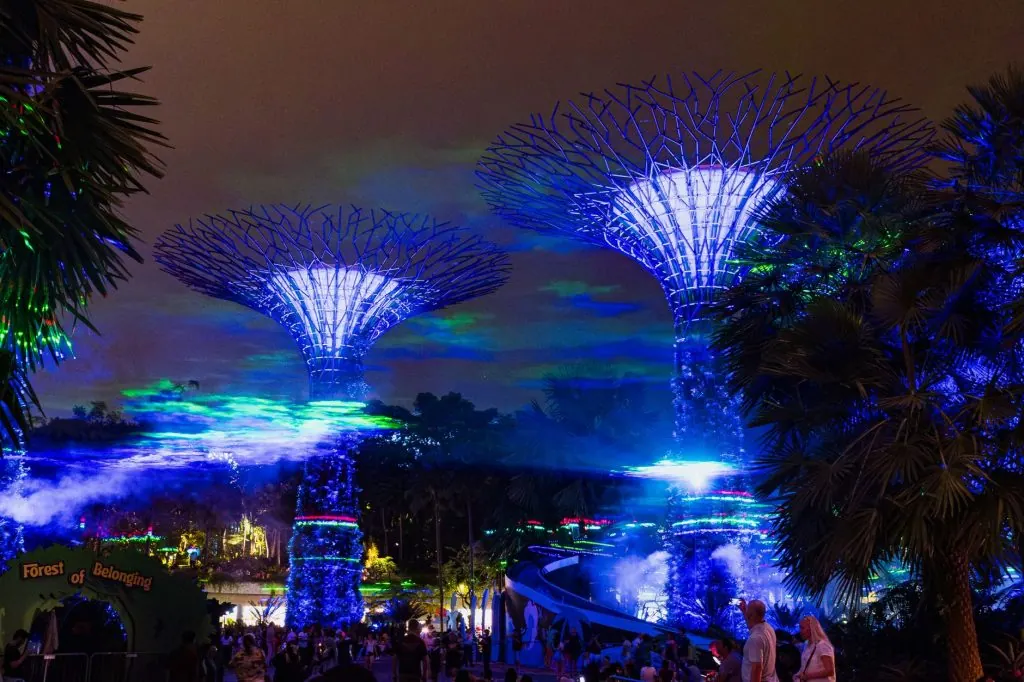
When darkness falls, the Supertree Grove becomes a stage. Garden Rhapsody is a light and sound show in which the Supertrees glow, pulse and change colour in time to a musical score. The theme and soundtrack change through the year, sometimes to mark festivals, so a repeat visit is not necessarily the same show.
How to watch it
The show is free and takes place in the main grove, so you simply turn up. The best way to watch is the way many locals do: lie down on the paving or the grass under the Supertrees and look straight up. The canopies fill your view and the lights feel much bigger than they do from the edges. Arrive early to claim a spot in the middle of the grove, particularly at weekends and during school holidays, when it gets crowded.
Show times are set by the gardens and can change, so check the official website on the day. Heavy rain or lightning can cancel a performance, which is another reason not to leave the show until your last night in Singapore.
Pairing with Spectra
On the other side of Marina Bay Sands, on the waterfront promenade, a free light and water show called Spectra runs in the evening too. The two shows are usually timed so that it is possible to see both on the same night by walking between them through the hotel and across the bridges. Check both schedules before you set out, and allow time for crowds when everyone leaves the grove at once.
Reason five: the quieter gardens most visitors skip
Large parts of Gardens by the Bay have nothing to do with the domes or the Supertrees, and they are free. They are where you find space, shade and some of the most interesting planting.
The Heritage Gardens
The Heritage Gardens are a set of themed gardens built around the main communities and history of Singapore. There is an Indian garden, a Chinese garden, a Malay garden and a Colonial garden, each planted with species that matter to that culture, from spices and medicinal plants to the cash crops that shaped the colonial economy. Small signs explain the uses of the plants. It is a gentle, informative walk and a good counterweight to the spectacle elsewhere.
Lakes, bridges and the World of Plants
Dragonfly Lake and Kingfisher Lake sit along the edge of the grounds, with boardwalks over the water and planting designed to filter it naturally. Herons and other water birds are common, and monitor lizards are sometimes seen basking on the banks. Nearby, the World of Plants area covers rainforest ecology, with sections on fruit trees, understorey plants and the way life is layered in a tropical forest. Sculptures are dotted throughout the grounds, which makes wandering without a plan rewarding.
Floral Fantasy
Floral Fantasy is a smaller, separately ticketed indoor attraction near the main entrance. It is more an art installation than a botanical garden: flowers hang from the ceiling, climb sculptural frames and fill a series of themed zones with dramatic lighting. There is also a short simulated flight film, which children usually enjoy. It is well done, but it is the first thing to cut if you are short of time or money, because the two main conservatories offer more for the same effort.
Bay East Garden
Bay East Garden is a separate, much quieter garden on the far side of the water from the main grounds. It is mostly open lawns and waterside paths, popular with joggers and picnickers, and its real reward is the view back across the bay to the Supertrees, the domes and the city skyline. It is not connected to the main area by a short walk, so treat it as a separate outing, ideally around sunset, rather than something to tack on at the end of a long day.
Reason six: a rare free day out for families
Singapore can be expensive with children, and Gardens by the Bay is one of the places where a family can spend hours without buying much at all. The outdoor gardens, the Supertree Grove and the evening show are free, and there is plenty of space to run around.
The Children's Garden
The Children's Garden is a free play area with water jets, fountains and splash zones, as well as treehouses, rope bridges and play equipment set among trees. On a hot afternoon it is a very good place in the city for small children to cool off. Bring swimwear or a change of clothes, a towel and a dry bag for wet things. It closes on some days for maintenance and the water play stops in bad weather, so check the official site before you promise it to anyone.
Making the domes work with children
- Cloud Forest first: the lift, the waterfall, the pitcher plants and the walkways hold children's attention better than flower beds.
- Time it with the mist: a scheduled misting turns an ordinary walk into an event.
- Take a layer: small children feel the cool air in the domes quickly.
- Keep the evening for the show: Garden Rhapsody is short, free and easy for young children to enjoy lying on the ground.
Pushchairs are manageable on the paved outdoor paths, and the conservatories have lifts. The grounds are large, though, so plan rest stops and know where the toilets and water points are. If you are building a wider family trip around the region, 10 Asian Destinations to Go with Your Kids covers other places that work well with children.
Planning your visit: getting there, tickets, heat and rain
Most problems at Gardens by the Bay come from timing: arriving in the midday heat, being caught by a storm on the Skyway, or missing the evening show. A little planning avoids all of them.
Getting there
- By MRT: Bayfront station, on the Circle and Downtown lines, is the usual approach. Follow the signs for Gardens by the Bay through the underground link, and you come up near the main entrance and the Supertree Grove.
- Via Marina Bay Sands: elevated bridges link the hotel and shopping complex to the gardens, crossing the busy road between them. If you are already at the waterfront, this is the easiest way in, and it is shaded for much of the route.
- From the south: a station named Gardens by the Bay on the Thomson-East Coast Line serves the southern edge of the grounds, which can be handy if you are heading for the conservatories or coming from elsewhere on that line.
- By taxi or ride-hail: drop-off points are close to the conservatories and the main entrance. This is often the simplest way to reach Bay East Garden.
Inside the grounds, distances between the entrance, the grove and the domes are longer than they look on the map. An internal shuttle has run between the main points; check whether it is operating and how it works on the day.
Free and ticketed areas
The basic split is simple. The outdoor gardens, the Supertree Grove at ground level, the Heritage Gardens, the lakes, the Children's Garden and Garden Rhapsody are free. The Cloud Forest, the Flower Dome, Floral Fantasy, the OCBC Skyway and the Supertree Observatory are ticketed. Prices, combined tickets and any discounts for residents change, so check the official Gardens by the Bay website before you go. Buying online ahead of time saves queuing in the heat, and some attractions use timed entry at busy periods.
Heat and rain
Singapore is hot and humid all year, and the outdoor parts of the gardens have patches of open ground with little shade. A plan that works well:
- Morning: the outdoor gardens, the Heritage Gardens and the lakes, before the heat peaks.
- Midday and early afternoon: the conservatories, which are cool whatever the weather outside.
- Late afternoon: a rest, a meal, or the Children's Garden.
- Evening: the Supertree Grove at dusk, then Garden Rhapsody.
Short, heavy downpours and thunderstorms are common, often in the afternoon. When lightning is near, outdoor attractions such as the Skyway close until it passes, so carry a compact umbrella and keep the domes as your shelter. Bring a refillable bottle, wear shoes with grip, since the paving gets slippery in rain, and use sunscreen even on cloudy days.
Eating
There are cafés and restaurants in and around the conservatories, and a hawker-style food centre inside the grounds near the water. It is a good place for an early dinner before the evening show, with local staples such as satay, chicken rice, laksa and char kway teow. Expect it to be busy around sunset.
Reason seven: it fits neatly into a Marina Bay day
Gardens by the Bay sits on the edge of Marina Bay, and the easiest way to get the most out of it is to make it part of a longer loop around the waterfront rather than a single, isolated stop.
A simple half-day loop
- Merlion Park: the city's half-lion, half-fish statue spouting water into the bay, with views across to Marina Bay Sands.
- Esplanade: the performing arts centre with its spiky, durian-like roofs, and a waterfront promenade beside it.
- Helix Bridge: a pedestrian bridge shaped like a DNA strand, linking the Esplanade side to Marina Bay Sands.
- ArtScience Museum: the lotus-shaped museum by the water, which runs changing exhibitions and is useful on a rainy afternoon.
- Marina Bay Sands: walk through to the bridges and into the gardens, or go up to the rooftop observation deck for a view straight down over the Supertrees.
Doing the loop in this order in the late afternoon brings you to the gardens just as the light starts to fade. You see the Supertree Grove at dusk, stay for Garden Rhapsody, then walk back to the waterfront for Spectra if the timings work.
What to skip if time is short
With only a few hours, see one conservatory, walk the Supertree Grove, and stay for the evening show. Leave Floral Fantasy, the Supertree Observatory and Bay East Garden for a second visit. With a full day, add both domes, the Heritage Gardens and the lakes, and keep the Skyway for whichever part of the day looks driest.
Whatever your plan, arrive with enough time to be lying under the Supertrees when the lights come on, because that is the moment that turns a pleasant garden visit into the part of Singapore you remember.
Official sources and further reading
Opening times, entry rules and prices change, so check them on the official sites before you travel:
- Gardens by the Bay: Opening hours, tickets and events at the gardens.