 By
It is a Saturday evening in Advent and you have been shuffling forward in a crowd for twenty minutes, holding a paper cup of something lukewarm, unable to reach a single stall. Two streets away, on a smaller square with a brass band and a fire pit, people are standing around chatting with room to spare. Most disappointing Christmas market trips come down to that gap: the right city at the wrong hour, or the famous square when the quieter one would have been the better evening.
This guide is for UK travellers planning an Advent city break: how to choose a market, what the well-known market cities are like, what to eat, what to buy, and the practical side of timing, cold, cash and booking.
Big famous market or small town: how to choose
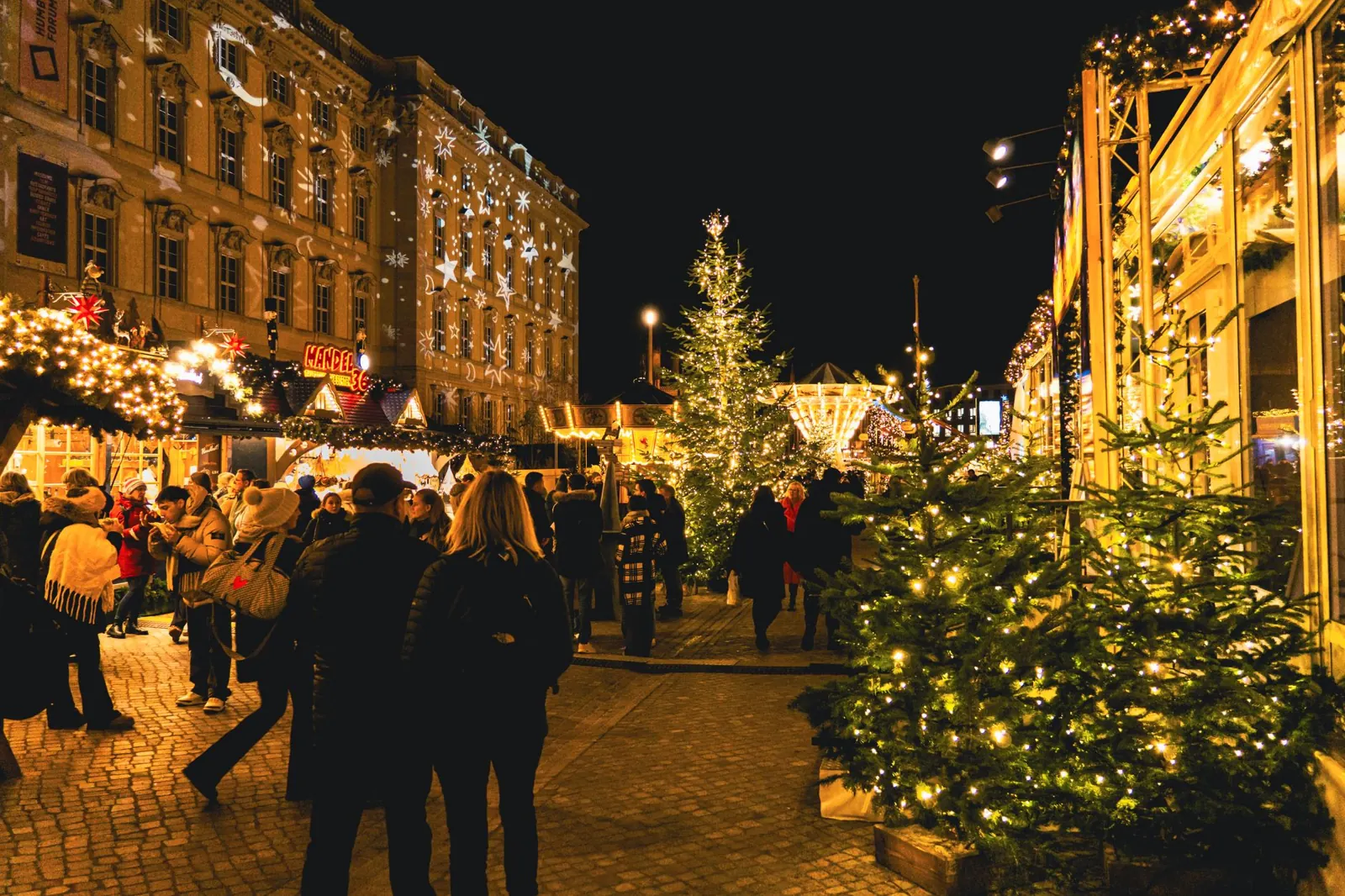
The first decision is not which country but what kind of evening you want. The famous markets in the big cities are spectacular, well organised and close to good transport, but they draw coach parties and day-trippers from across the region. Smaller towns have fewer stalls and less choice, yet the atmosphere is often more local: families meeting after work, a choir on the steps of the church, stallholders with time to talk.
Questions that narrow it down
- Do you want a city break with a market, or a market with a town attached? If you would happily spend the daylight hours in museums, palaces or galleries, pick a city you want to see anyway, such as Vienna, Prague or Dresden, and treat the market as the evening. If the market is the whole point, a compact town with several squares can be more satisfying.
- How do you feel about crowds? The best-known squares can be shoulder to shoulder at weekends. If that spoils it for you, choose a city with many separate markets spread across districts, so you can drift away from the busiest one.
- Weekend or day trip? A day trip only gives you a couple of hours of darkness, which is when the markets look their best. An overnight stay lets you see a market at dusk, eat properly, and return on a quiet morning to shop.
- How easy is it to get there? Cities with direct flights from UK airports or a simple rail connection are much less stressful in winter, when delays are more likely and daylight is short.
Combining markets in one trip
Some regions are well suited to a short rail trip linking two or three markets. The Rhine and Alsace pair naturally, as do Nuremberg and the smaller Franconian towns, Dresden and the Ore Mountains, or Vienna and Budapest. Keep it to one move every two days at most, because packing up and cold platforms eat into short winter afternoons.
A short tour of the well-known market cities
Each city below deserves its reputation, but each has a trade-off worth knowing before you book.
Nuremberg
The Christkindlesmarkt fills the Hauptmarkt in the old town, with rows of stalls under red and white striped roofs in front of the Frauenkirche. It is opened each season by the Christkind, a young woman in gold who gives a prologue from the church balcony. The market has strict rules on what may be sold, which keeps out much of the plastic tat seen elsewhere. Look for the Zwetschgenmännle, little figures made from dried prunes and nuts, and eat the small Nuremberg sausages, served three in a bread roll. A separate children's market and a market of Nuremberg's twin towns sit nearby. The trade-off is crowds: the Hauptmarkt is tight, and on Saturdays it can be hard to move.
Dresden
The Striezelmarkt on the Altmarkt takes its name from Striezel, an old word for the fruit bread now known as Stollen. Dresden Stollen is a protected product, and you will see it sold whole in boxes, which travel home well. The market is a showcase for crafts from the nearby Ore Mountains, with a tall wooden Christmas pyramid turning above the stalls. Dresden also has several other markets, including one around the rebuilt Frauenkirche and a medieval-themed market in the courtyard of the Stallhof. The baroque centre, the Zwinger and the galleries make it an easy city to fill daylight hours.
Cologne
Cologne does not have one market but several, and that is its strength. The market in front of the cathedral sits under a canopy of lights beside the twin spires. A short walk away, the Alter Markt and its neighbouring square have a theme built around the Heinzelmännchen, the helpful house gnomes of local legend. The Neumarkt market is known for its angels theme. Each market has its own mug design, which turns a walk between them into a small collecting mission. The cathedral market is the busiest, so start elsewhere.
Strasbourg
Strasbourg calls itself the capital of Christmas, which is a nickname rather than a fact, but its Christkindelsmärik has a very long history and the city dresses up with real commitment. Stalls spread across the island at the centre of the old town, with the main market on Place Broglie, more around the cathedral, and a giant decorated tree on Place Kléber. Because Alsace mixes French and German culture, you get vin chaud alongside Alsatian Christmas biscuits called bredele. Expect security checks and some street closures around the centre, and allow time for them. The half-timbered houses of Petite France are worth a walk after dark.
Vienna
Vienna has many markets rather than one. The large market on Rathausplatz, in front of the neo-Gothic city hall, has illuminated trees in the park and is the one most visitors find first. The market in front of Schönbrunn Palace is more spacious and has a stronger focus on crafts, and the small market in the lanes of Spittelberg feels more like a neighbourhood gathering. Vienna's drink of choice is Punsch, often fruitier and stronger than mulled wine, with rum or other spirits, and a non-alcoholic Kinderpunsch for children.
Prague
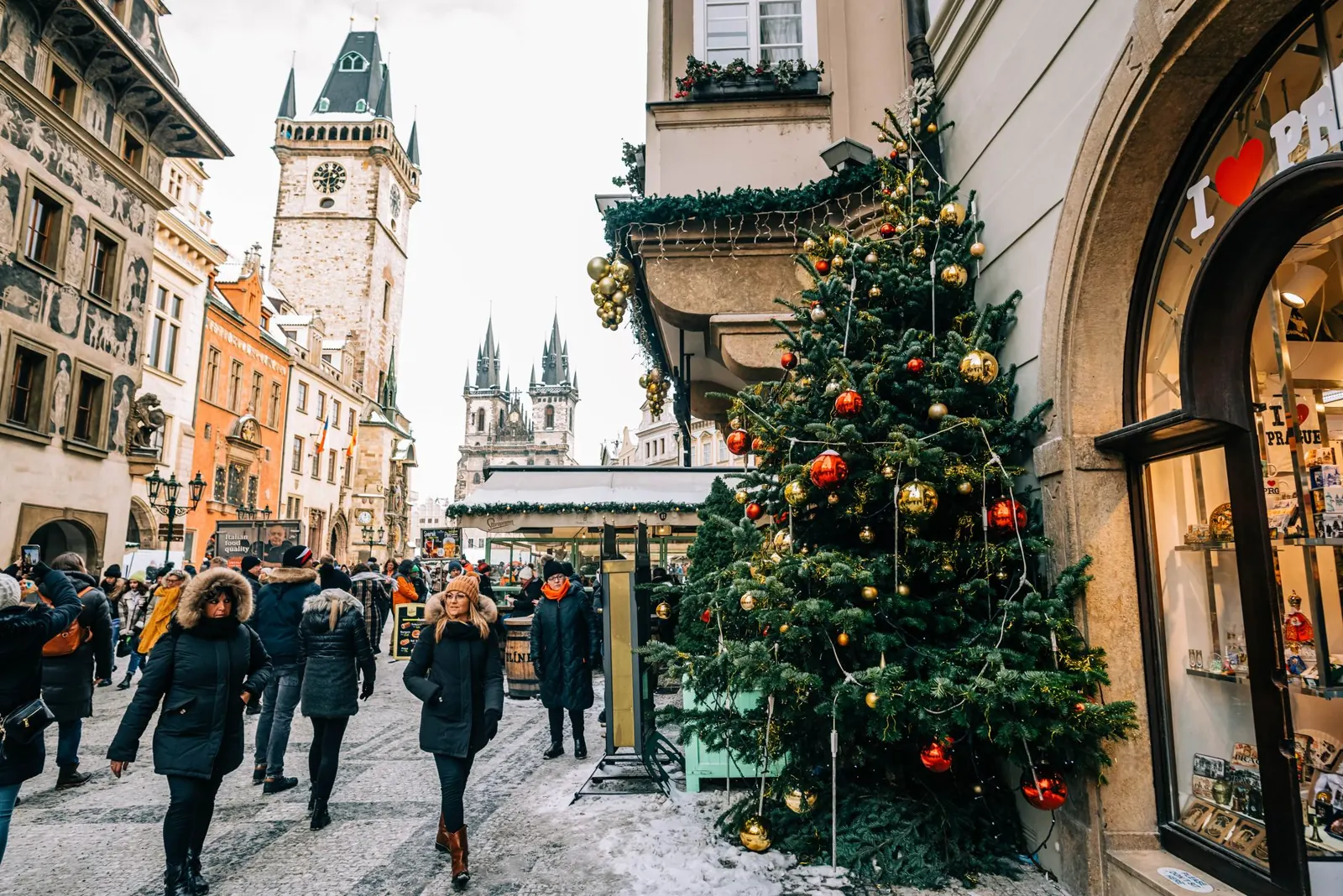
The market on Old Town Square sits beneath the twin towers of the Týn Church, with a tall tree and a stage, and there is a second large market on Wenceslas Square. It is very pretty and very busy, and food prices on the main square are aimed squarely at visitors. Roast ham is carved from the spit and sold by weight, so ask how much you are getting before it is cut. To see the quieter side of the city between market visits, read Prague Beyond the Bridge: Quiet Streets, Hills and Views.
Budapest
The main market is on Vörösmarty tér, at the start of the pedestrian Váci utca, with a second popular market in front of St Stephen's Basilica, where light shows play across the façade. Hungarian food makes this market stand out: Lángos, chimney cakes and hearty stews. Budapest also gives you the thermal baths, which feel very different on a cold winter evening. Budapest by Day and Night: Two Banks, Thermal Baths and Ruin Bars covers the rest of the city.
Bruges and Ghent
The Belgian pair are an easy trip from the UK by train via Brussels. Bruges sets up its market on the Markt beneath the belfry, often with an ice rink, and on Simon Stevinplein. It is beautiful but small, and the town fills with day visitors. Ghent's winter festival spreads stalls around the squares near St Bavo's Cathedral and the belfry, and the city has more of a lived-in student feel. Splitting a weekend between them works well; Ghent and Bruges: Canals, Belfries and How to Split Your Time explains how.
Tallinn
Tallinn's market stands on Town Hall Square, in the heart of a walled medieval old town, with a large tree in the centre. It is smaller than the German markets, but the setting is memorable, and in a cold, snowy spell it looks like a Christmas card. Daylight is very short this far north, so plan sightseeing for the middle of the day and the market for the long evening. Try blood sausage with sauerkraut, a traditional Estonian Christmas dish.
What to eat and drink
Food is half the reason to go. Graze: one thing at one stall, a walk, then another.
Mulled wine and the cup deposit
Mulled wine has different names across Europe: Glühwein in Germany and Austria, vin chaud in France, svařák in Prague and forralt bor in Budapest. Many stalls also offer white mulled wine, mulled cider, hot apple juice or Eierpunsch, a warm egg liqueur drink. In German-speaking markets, look out for Feuerzangenbowle, where a rum-soaked sugar loaf is set alight over a bowl of hot wine.
At most German, Austrian and Alsatian markets, drinks come in a ceramic or glass mug with a deposit added to the price. Return the mug to any stall at the same market and you get the deposit back. Keep it and it becomes a souvenir, which is what many people do, since designs usually change each season. Check before you wander between markets in a big city: mugs often belong to one market only, and another market's stalls may not take them back. Some markets now use reusable plastic cups or have no deposit at all.
Savoury food
- Bratwurst: grilled sausage in a bread roll, with mustard. In Nuremberg, the small local sausages come three to a roll.
- Roasted chestnuts: sold hot in paper cones, and good for warming hands as well as eating.
- Raclette: melted Alpine cheese scraped from a wheel onto bread or potatoes. It is popular at German and French markets as well as in Switzerland.
- Reibekuchen: fried potato pancakes, often served with apple sauce, a staple in Cologne.
- Flammkuchen: the thin Alsatian flatbread with cream, onions and bacon, common in Strasbourg.
- Lángos: deep-fried Hungarian dough, topped with garlic, sour cream and grated cheese. One is plenty for two.
Sweet things
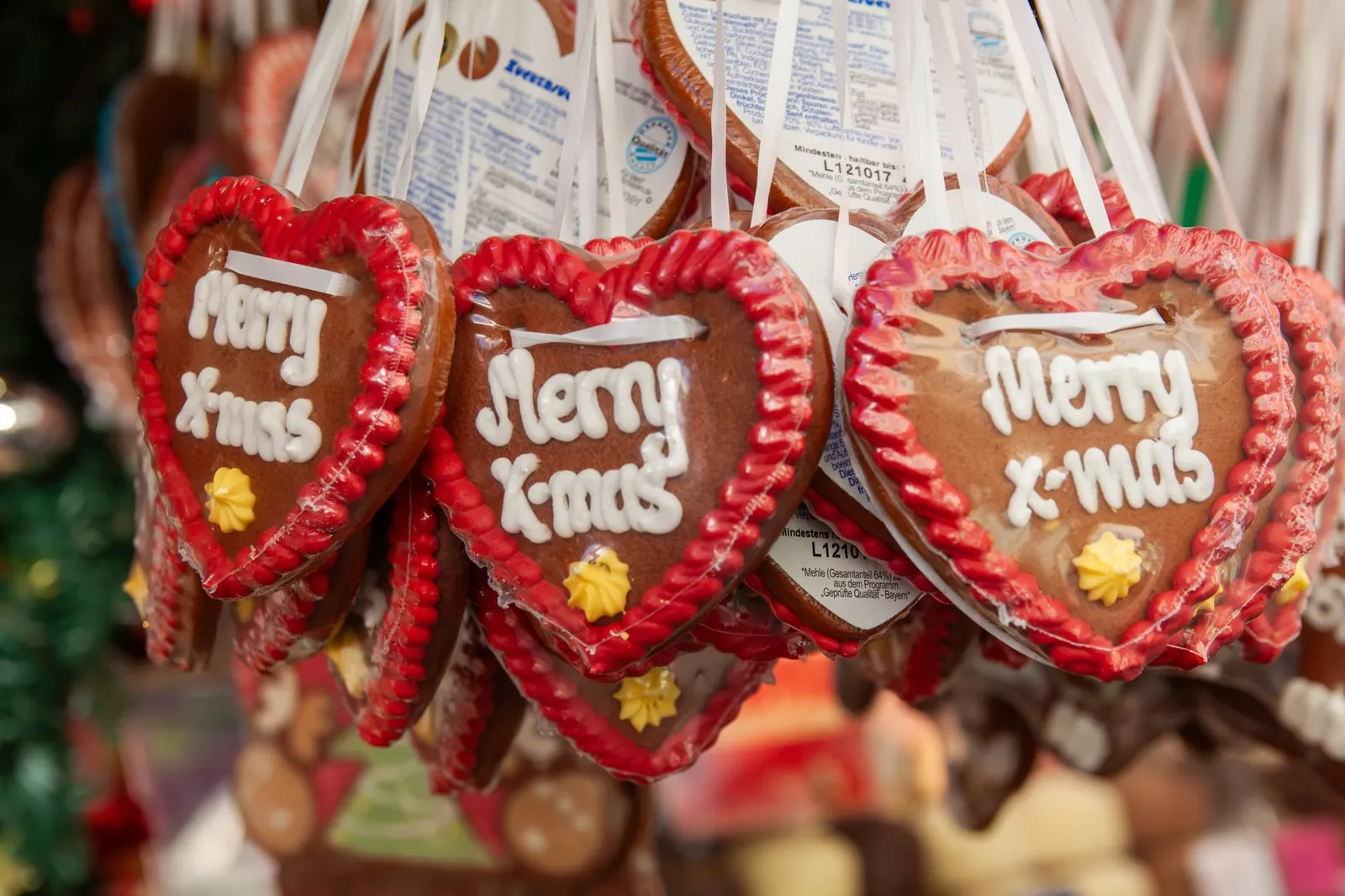
- Lebkuchen: spiced gingerbread, with a long tradition in Nuremberg. The soft round ones baked on a wafer base are the classic. Iced gingerbread hearts on ribbons are for hanging round your neck or on the wall rather than eating.
- Stollen: rich fruit bread dusted with sugar, at its home in Dresden.
- Chimney cakes: a spiral of dough baked on a spit and rolled in sugar, a genuine Hungarian and Transylvanian speciality.
- Trdelník: sold all over Prague, often filled with ice cream or chocolate. Despite the signs claiming an old Czech tradition, it is a recent tourist snack related to chimney cake. Enjoy it, but know what it is.
- Candied almonds: roasted in sugar and cinnamon, and the smell that drifts across every German market.
What to buy, and how to avoid mass-produced imports
Walk the length of any big market and you will notice the same light-up reindeer, the same felt hats and the same snow globes appearing at stall after stall. These are imported in bulk and sold across Europe. They are not worth carrying home. The pleasure of a market purchase is buying something made nearby, by someone who can tell you how.
Crafts worth looking for
- Wooden toys and figures from the Ore Mountains: the Erzgebirge, on the border between Saxony and the Czech Republic, is the traditional home of German wooden Christmas crafts, centred on villages such as Seiffen.
- Christmas pyramids: tiered wooden carousels turned by the heat of candles, with nativity scenes, miners or angels on each level.
- Nutcrackers: the upright soldier, king or forester figures with a lever in the back.
- Smoking men: wooden figures that puff incense smoke from their mouths.
- Candle arches: curved wooden or metal arches set in windows, a tradition from the mining towns of the Ore Mountains.
- Glass ornaments: hand-blown and hand-painted baubles, a tradition associated with Lauscha in Thuringia.
- Star lanterns: many-pointed paper or plastic stars from Herrnhut in Saxony, and simple straw stars.
How to tell real from imported
Ask where an item was made and who made it. A craftsperson will usually be happy to explain, and some work at their stall. Turn pieces over and look for maker's marks, labels of origin or signatures. Check for consistency: if a stall has dozens of identical items in every colour, they came from a factory. Genuine handmade work costs more, and the price gap is itself a clue. If you want Ore Mountains crafts, look for stalls showing an association label or the name of a workshop, and be wary of anything simply described as traditional.
Pack thoughtfully. Wooden pieces travel well; glass baubles need padding. Food such as Stollen and Lebkuchen is easy, but check the rules if you buy meat or cheese to take home, as rules on bringing animal products into the UK change.
Timing: Advent, weekdays and dusk
Christmas markets run through Advent, the weeks leading up to Christmas. Some open a little before the first Sunday of Advent. Many close on or a day or two before Christmas Eve, which is when families gather at home, especially in German-speaking countries. A few in some cities stay open after Christmas, sometimes with a winter theme into the new year. Every market sets its own season and hours, so check the official city or market website before you book.
Choose a weekday if you can
Weekends, particularly Saturdays, are when markets are at their busiest. Locals come out, coach tours arrive from neighbouring regions, and the famous squares become hard to navigate. A Tuesday or Wednesday evening is a different experience, with space to look at stalls properly and seats at the tables around the drink huts.
Arrive at dusk
The best time is the hour when daylight fades and the lights come on. You get to see the stalls clearly, watch the market change character, and eat before the evening rush. Late morning is the other quiet window for serious shopping.
If you are flexible, aim for the earlier part of Advent. The final weekend before Christmas is usually the most crowded, and some stalls run short of their best stock.
Cold, cash and crowds
Dress for standing still
A market is not a walk; it is slow shuffling and long minutes standing on cobbles or frozen ground. Cold rises through your soles first, so thick socks and warm, waterproof boots with a good grip matter more than a heavy coat. Wear layers you can open in a warm shop or restaurant and close again outside. Gloves are essential, and thin ones with grip let you hold a hot mug and unwrap food without taking them off. Add a hat and scarf, and a small bag rather than a large backpack in tight crowds.
Paying
Cash is still common at market stalls, especially in Germany and Austria, and some smaller stalls take nothing else. Cards and contactless payment are increasingly accepted, but not everywhere, and connections can drop on a busy evening. Carry a modest amount of local currency in small notes and coins, and keep your card as a back-up. Remember that the Czech Republic and Hungary use their own currencies rather than the euro, so check before you travel.
Pickpockets
Dense, slow crowds are where pickpockets work. Keep your phone and wallet in an inside or front pocket that zips, wear bags across the body with the opening facing in, and be alert when someone bumps into you or a group presses close. Do not put your phone on a standing table while you eat. Take extra care at the busiest squares and around tram and metro stops near the markets.
Other things to know
Some markets have bag checks or barriers at entry points, so carry less to get through faster. Mulled wine is stronger than it tastes, and the heat goes to your head quickly in the cold, so alternate with non-alcoholic drinks.
Booking: trains, hotels and getting there
The most famous market cities fill up in Advent, and the weekends go first. Hotels in Nuremberg, Strasbourg, Cologne, Vienna and Prague can be scarce on Saturday nights, and prices climb as the season approaches. Book accommodation as early as you can, and choose a refundable rate if your plans might change.
Where to stay
Staying within walking distance of the main market lets you go back to the room to warm up or drop off shopping, and return later when the crowds thin. If central hotels are full, look for somewhere near a direct tram or train line rather than a cheaper option far out of town. In Strasbourg, the nearby towns of Alsace can be an easier base on peak weekends. In Bruges, staying overnight means you see the town after the day visitors leave.
Trains and flights
Rail from the UK works well for Belgium, northern France and the Rhine, with connections through Brussels or Paris. For Germany, Austria, the Czech Republic, Hungary and Estonia, most people fly. Book train tickets in advance where you can, since cheaper fares sell first, and allow extra time in winter for delays. Check official websites for timetables and engineering works.
Pick a city you would visit anyway, book a weekday night if you can, and be on the square with warm feet and a few coins just as the lights come on.
Official sources and further reading
Opening times, entry rules and prices change, so check them on the official sites before you travel:
- Germany Travel (official): Germany's national tourist board, with seasonal and Advent information.
- Vienna (official tourism site): Vienna's official visitor site, including its winter and Advent markets.
- GOV.UK: foreign travel advice: Entry requirements, safety and health advice for every country, kept up to date by the UK government.